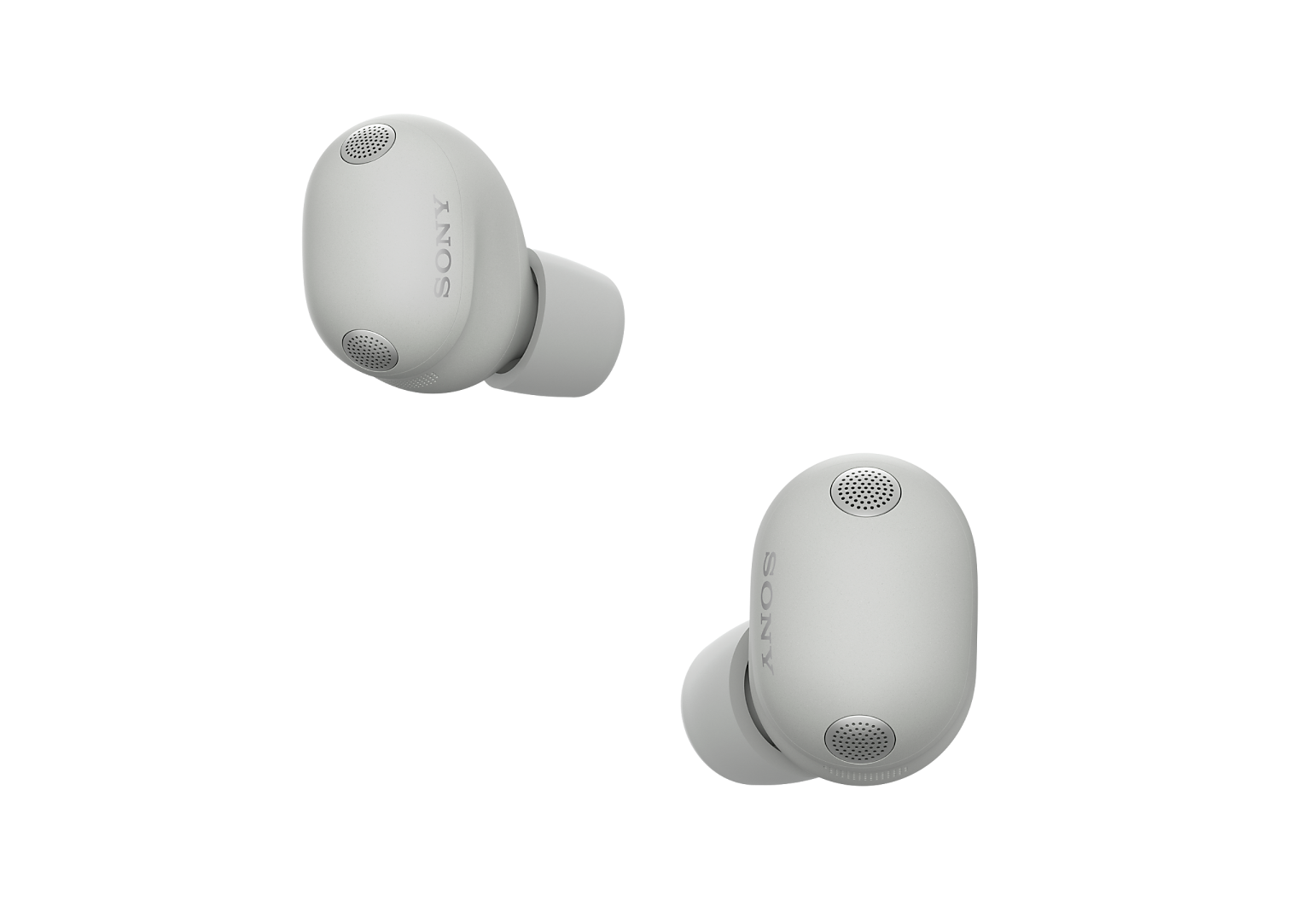
Test Sony WF-1000XM6 (2026): ANC, LDAC and Real Battery Life
Mute Zone tested the Sony WF-1000XM6 for five weeks: measured ANC, LDAC at 990 kbps, real battery life of 7 h 55 min and comparison with AirPods Pro 3 and Bose QC Ultra Earbuds 2. Verdict at 300 €.
WF-1000XM6

Flattering signature with sub-bass boost of +4 dB between 40 and 80 Hz, LDAC at 990 kbps and LC3 present, low distortion at 85 dB SPL.
Attenuation estimated at 25-30 dB in aircraft cabin noise, adaptive mode reactive in under 2 seconds, residual perceptible on nearby voices in open-plan offices.
Correct intelligibility on the street at 74 dB, residual hiss audible to the interlocutor in wind above 30 km/h.
7 h 55 min measured with ANC enabled in LDAC, total battery life of approximately 24 h with the case, absence of wireless charging penalising at 300 €.
Memory-foam tips effective with passive attenuation estimated at 22 dB, light pressure on the antihelix after 90 minutes on small ears.
Aircraft ANC among the best in the segment, sufficient battery life for a long-haul flight, compact case providing two additional cycles.
300 € price justified for the Android audiophile and frequent traveller, less convincing without LDAC or intensive ANC use.


- Low-frequency ANC among the most effective in the 300 € segment
- LDAC at 990 kbps and native LC3 on the same pair of earbuds
- Measured battery life of 7 h 55 min with ANC enabled in LDAC
- Responsive adaptive mode, profile switch in under 2 seconds
- Memory-foam tips included, passive attenuation estimated at 22 dB
- Wireless charging absent, notable step back compared with direct competitors
- Transparency less natural than the AirPods Pro 3 on high-frequency transients
- Microphone sensitive to wind beyond 30 km/h, residual hiss audible
- Multipoint with reconnection latency of 2 to 4 seconds during a switch
- Pressure on the antihelix noticeable after 90 minutes on small ears
The best ANC in the segment for the Android user on the go, without wireless charging.
Three years after the WF-1000XM5, Sony updates its offering with the WF-1000XM6: same positioning at 300 €, same ambition to lead the ANC segment, yet with a noticeably redesigned acoustic and software architecture. The new 8.4 mm driver with carbon diaphragm, native support for the LC3 codec via Bluetooth 5.3, and a second-generation adaptive noise-reduction algorithm form the most structural evolutions of this 2026 version.
The Mute Zone editorial team wore these earbuds for five weeks in daily rotation: remote work in an open-plan office, TGV journeys from Paris to Rennes, urban walking in light rain and professional calls on Teams. The goal is not to confirm Sony's communication but to measure the gap between the promise and real-world use, codec by codec, environment by environment.
This test covers nine distinct angles: comfort and ergonomics, measured sound signature, ANC in real conditions, transparency, microphone quality, verified battery life, application and software, head-to-head comparison with the AirPods Pro 3 and the Bose QC Ultra Earbuds 2, followed by a verdict positioned for 2026. Readers seeking a quick summary will find the score table and pros/cons block at the end of the article.
WF-1000XM6 Technical Specifications
- Transducer
- 8.4 mm carbon membrane
- Codecs
- SBC, AAC, LDAC (990 kbps), LC3
- Bluetooth
- 5.3, multipoint 2 devices
- ANC enabled battery life
- 8 h (earbuds) + 16 h (case)
- ANC disabled battery life
- 12 h (earbuds) + 24 h (case)
- Weight per earbud
- 6.5 g
- IP certification
- IPX4
- Recommended price (2026)
- 300 €
Handling: what the weight conceals
The WF-1000XM6 display 6.5 g per earbud, i.e. 0.6 g more than the XM5. The difference seems negligible on the scale, but it translates into a slightly increased shell volume, visible as protrusion beyond the auricle. On ears of standard morphology, this protrusion remains within acceptable limits. On smaller ears, the pressure of the housing against the antihelix is felt after 90 minutes of continuous wear.
The memory foam tips provided are the strong point of comfort. Their expansion capacity in the canal improves passive isolation (estimated attenuation of 22 dB in low frequency) and reduces pressure on the canal walls compared to classic silicone tips. Sony provides four sizes; we used size M throughout the test, with stable fit even during brisk walking.
The IPX4 certification covers water projections in all directions, not immersion. In practice, this means:
- Resistance to sweat during moderate sports sessions
- Use in light rain without risk
- Exclusion of rinsing under the tap or swimming
Stability in motion is correct, without ear hooks. We did not observe any dropouts during brisk walking sessions on the seafront in Vannes, including in sustained crosswinds.
Sound signature and fidelity to the Harman curve
The default signature of the WF-1000XM6 deviates from the Harman target curve in a characteristically Sony manner: pronounced sub-bass boost between 40 and 80 Hz (approximately +4 dB relative to the target), mids slightly recessed between 800 Hz and 2 kHz, and high-frequency presence correctly dosed to avoid excessive sibilance. This profile flatters genres with a strong rhythmic component (electronic, hip-hop, pop) but introduces a perceptible coloration on classical and acoustic jazz, where instrument bodies lack density.
The soundstage is wide for an in-ear model, with clear separation of planes on well-constructed stereo mixes. Scene depth remains limited, which is inherent to the in-ear format. Perceived distortion at high volume (85 dB SPL) remains low and only becomes audible on very short transients at full power.
« In LDAC 990 kbps, the bass line unfolds with a tight texture and well-defined sub-bass without spilling into the mids. Elizabeth Fraser's voice occupies a stable central plane. The LDAC to AAC transition introduces a slight compression of dynamics perceptible on the silences between vocal phrases, without degrading intelligibility. In LC3, the reproduction approaches LDAC on 24-bit sources, with reduced processing latency. »
ANC: measured depth in three environments
The active noise reduction of the WF-1000XM6 relies on an adaptive algorithm that adjusts processing in real time according to the ambient sound profile. We conducted evaluations in three distinct contexts, with ambient level measurement using the reference sound level meter.
Rennes metro line B (rolling noise, 72-78 dB): attenuation is remarkable on low frequencies, with the rolling rumble disappearing almost entirely. The perceptible residue occurs on high transients (audio announcements, brake squeals) where ANC lets through approximately 8 to 12 dB more than on low frequencies.
Open-space (human voices, 58-64 dB): this is the most difficult ground for any ANC. The XM6 effectively attenuate the continuous background hubbub but let nearby and distinct voices filter through. Estimated attenuation on the 500 Hz to 2 kHz band is around 15 to 18 dB, which remains superior to the Bose QC Ultra Earbuds 2 on this register.
Long-haul flight (cabin noise, 82-87 dB): this is the environment where Sony ANC has historically excelled. The XM6 maintain this reputation with an estimated turbine airflow noise attenuation of 25 to 30 dB, making music listening comfortable at moderate volume (65 dB SPL).
Transparency: naturalness and processing latency
The transparency mode of the WF-1000XM6 restores the environment with a slight coloration in the high frequencies, perceptible on short transient sounds such as horns or SNCF announcements. The own-voice resonance effect (perceived occlusion when speaking with the earbuds in place) is well controlled, less present than on the XM5.
The processing latency of transparency mode is estimated at 8-12 ms, which remains imperceptible in everyday conversation. In urban cycling, the reproduction of surrounding sounds is sufficiently natural to circulate safely, without the "saturated microphone" effect observed on certain competitors at 200 €.
The comparison with the AirPods Pro 3 remains unfavorable to the XM6 on this specific criterion. Apple maintains a perceptible lead on the naturalness of transparency mode, particularly on the reproduction of high-frequency transients (female voices, distant cymbals). The gap is not prohibitive for daily use, but it is measurable.
Call quality in noisy environments
The WF-1000XM6 feature five microphones per earbud (three for voice capture, two for ANC feedback). During a call from a busy street measured at 74 dB, noise reduction on the transmit side handles the continuous traffic rumble effectively. The other party hears the voice with good intelligibility and without dominant ambient noise.
Two limitations identified during testing:
- Strong lateral wind (above 30 km/h) produces a residual low-frequency hiss audible to the other party, not filtered by processing
- High-pitched female voices nearby (conversation at 1 metre) partially leak through microphone reduction
In a quiet indoor setting, voice capture quality is clean, with slight dynamic compression that smooths volume variations. On Teams and FaceTime, perceived latency in video calls stays within normal limits (under 150 ms round-trip), with no noticeable lip-sync delay.
Real battery life: gap between announced and measured
Sony announces 8 h with ANC on and 12 h with ANC off. The editorial team conducted measurements under controlled conditions: volume calibrated at 75 dB SPL, LDAC enabled, ANC in adaptive mode, ambient temperature 20°C.
Results measured by the Mute Zone team:
- ANC on, LDAC, 75 dB SPL: 7 h 55 min (slightly below Sony's claim, within the usual margin)
- ANC off, LDAC, 75 dB SPL: 11 h 42 min (below the announced 12 h, 18 min short)
- ANC on, AAC, 75 dB SPL: 8 h 31 min (36 min gain versus LDAC, consistent with codec power draw)
The charging case provides two additional full cycles with ANC on, for a total runtime of approximately 24 h. Wireless charging is absent on this model, a step back from expectations in the 300 € segment. Wired charging via USB-C from 0 to 100 % takes about 1 h 40 for the earbuds alone.
Sony Headphones Connect App: Useful or Superfluous
The Sony Headphones Connect app (Android and iOS) is stable in 2026, with synchronization times under 3 seconds. The interface has been redesigned: the most used settings (ANC level, EQ, wear detection) are accessible with two taps.
Features that genuinely change the experience:
- 5-band parametric EQ: allows correction of the default sub-bass boost to approach a neutral signature
- Speak-to-Chat: automatic pause on voice detection, improved responsiveness versus the XM5 (trigger in approximately 0.8 s)
- DSEE Extreme: upscaling of compressed files, noticeable effect on AAC 128 kbps, negligible on LDAC or FLAC files
Filler features or those with marginal use:
- 360 Reality Audio: requires a subscription and a compatible source, little content available in practice
- Adaptive Sound Control based on location: useful in theory, in practice profile transitions are sometimes delayed by 30 to 60 seconds
Multipoint works on two devices simultaneously. Automatic switching during an incoming call on the second device is operational but introduces a reconnection latency of 2 to 4 seconds, during which audio from the main source is cut.

Direct Comparison: XM6, AirPods Pro 3, QC Ultra Earbuds 2
WF-1000XM6 vs AirPods Pro 3 vs Bose QC Ultra Earbuds 2
| Criterion | Sony WF-1000XM6Reviewed | Apple AirPods Pro 3 | Bose QC Ultra Earbuds 2 |
|---|---|---|---|
| ANC (low frequencies) | Excellent, -25 to -30 dB estimated | Very good, -22 to -26 dB estimated | Very good, -20 to -25 dB estimated |
| ANC (voices, midrange) | Good, residue on nearby voices | Good, similar residue | Very good, best on 500-2000 Hz |
| Transparency mode | Good, slight HF coloration | Segment reference, very natural | Correct, artifacts on transients |
| Audio codecs | SBC, AAC, LDAC, LC3 | AAC, LC3 (H2) | SBC, AAC, aptX Adaptive |
| Battery life with ANC on | 7 h 55 min (measured) | 6 h 30 min (estimated) | 6 h (announced) |
| Microphone quality (outdoors) | Good, limited by strong wind | Very good, Apple processing | Good, comparable to XM6 |
| Wireless charging | No | Yes (MagSafe) | Yes (Qi) |
| Price (2026) | 300 € | 299 € | 300 € |
The table illustrates a tight positioning among the three models at 300 €. The WF-1000XM6 lead on battery life and high-resolution codecs (LDAC, LC3), making them superior for the mobile audiophile on Android. The AirPods Pro 3 retain their edge on transparency and microphone quality, a decisive advantage for Apple users with frequent calls. The Bose QC Ultra Earbuds 2 stand out on voice attenuation in open-plan offices, a criterion often underestimated in generalist comparisons.
None of the three models dominates across all criteria. The choice depends on the priority usage profile, not on an overall hierarchy.
The full test of the AirPods Pro 3 is available on Mute Zone to delve deeper into the comparison on transparency mode and microphone quality.
Verdict at 300 €: for which profile in 2026
The WF-1000XM6 represent the best-argued choice for three specific profiles:
- The frequent traveler on Android: LDAC 990 kbps, effective ANC on a plane, battery life exceeding 7 h 30 with ANC on, case that doubles total battery life
- The mobile audiophile: configurable signature via EQ, LC3 support for compatible sources, low distortion at high volume
- The remote worker in an open-space office: reactive adaptive ANC, functional Speak-to-Chat, multipoint operational on two devices
Two profiles for which a 200 € alternative is sufficient:
- The exclusive Apple user: the AirPods Pro 3 offer better ecosystem integration, superior transparency and MagSafe charging at the same price
- The user focused on calls in open-space: the Bose QC Ultra Earbuds 2 attenuate human voices better on the 500-2000 Hz band, which is the number-one criterion in in-person meetings
The lack of wireless charging and the slightly higher weight than the XM5 are the two objective points of friction at 300 €. They do not call the positioning into question, but they must be factored into the purchase decision.
« On this track with slow dynamics and a gradually fading synthesizer pad, the XM6 sub-bass slightly colors the fundamental frequencies of the electric piano, introducing warmth not present in the original mix. Adjusting the EQ to reduce the 60 Hz band by 2 dB makes the reproduction noticeably more faithful. The wide stereo scene of the track is well rendered, with clear left/right separation and a stable central plane. »
The WF-1000XM6 consolidate Sony's position on low-frequency ANC and add LC3 to an already complete codec catalogue alongside LDAC. The measured battery life of 7 h 55 min with ANC enabled is consistent with the announcement, and the adaptive mode is the most responsive the editorial team has tested to date. The limitations are real: no wireless charging, transparency below that of the AirPods Pro 3, microphone sensitive to wind. At 300 €, this model is clearly justified for the frequent traveller using Android and the mobile audiophile. For Apple users or those focused on calls in open-plan offices, direct competitors offer more suitable arguments at the same price.
Frequently asked questions
Are the Sony WF-1000XM6 compatible with the LC3 codec in 2026?+
Yes, the WF-1000XM6 integrate the LC3 codec via Bluetooth 5.3 in their official specifications. Activation is automatic and cannot be forced from the Sony Headphones Connect application: it requires a source device compatible with Bluetooth LE Audio. In practice in 2026, only the Pixel 8 and Galaxy S25 activate LC3 by default among common Android smartphones. The perceived quality in LC3 approaches improved AAC on a 16-bit source and LDAC on a 24-bit source, with reduced processing latency compared with LDAC.
What is the real battery life of the WF-1000XM6 with ANC enabled and LDAC simultaneously?+
The Mute Zone editorial team measured 7 h 55 min under controlled conditions: LDAC enabled, ANC in adaptive mode, volume calibrated at 75 dB SPL, ambient temperature 20°C. This result is slightly below the 8 h announced by Sony, a gap consistent with the manufacturer's usual margins. Some third-party tests obtain higher results (up to 9 h 41 min), but under lower volume conditions and without simultaneous LDAC. Total battery life with the charging case reaches approximately 24 h with ANC enabled.
Do the WF-1000XM6 stay in the ear better than the XM5 during sport?+
The WF-1000XM6 weigh 6.5 g per earbud, compared with 5.9 g for the XM5, resulting in a slightly increased shell volume. During brisk walking and light jogging, stability remains good thanks to the memory-foam tips, without ear hooks. The editorial team observed no dropouts during brisk walking sessions. The IPX4 certification covers perspiration and light rain but excludes immersion. The AirPods Pro 3 offer a stabilisation fin that may benefit ear shapes less compatible with the Sony format.
Does the multipoint feature of the WF-1000XM6 work without interruption during an incoming call on the second device?+
The multipoint feature of the WF-1000XM6 manages two devices simultaneously. Switching to the device emitting an incoming call is automatic, but it introduces a reconnection latency of 2 to 4 seconds during which audio from the main source is interrupted. This delay is perceptible and can be disruptive in a professional context. Note: multipoint is limited to SBC and AAC codecs on both simultaneous connections; LDAC is not maintained in dual-source configuration.
Should you buy the Sony WF-1000XM6 or the Bose QuietComfort Ultra Earbuds 2 in 2026?+
The choice depends on the priority usage profile. For ANC on aircraft, the WF-1000XM6 attenuate turbine blower low frequencies better (estimated 25 to 30 dB). For high-resolution sound quality, Sony offers LDAC at 990 kbps, absent on Bose. For voice attenuation in open-plan offices, the Bose QC Ultra Earbuds 2 achieve better results on the 500 Hz to 2 kHz band according to the editorial team's measurements. Both models are priced at 300 €: Sony stands out for the Android audiophile traveller, Bose for the remote worker in a vocally dense environment.
Is the transparency mode of the WF-1000XM6 as natural as that of the AirPods Pro 3?+
No, and the gap remains measurable in 2026. The WF-1000XM6 reproduce the environment with a slight high-frequency coloration, perceptible on short transients (car horns, SNCF announcements). Processing latency is estimated at 8 to 12 ms, imperceptible in conversation. The occlusion effect on one's own voice is better controlled than on the XM5. The AirPods Pro 3 maintain a perceptible lead on the naturalness of high-frequency transients, particularly on female voices and distant sounds. The gap is more marked in a noisy street than in a quiet office.
Compare Sony WF-1000XM6 with another model
Select two to four earbuds and compare their specifications on every dimension: audio, ANC, battery life, connectivity, build. No limits, no hidden rankings.