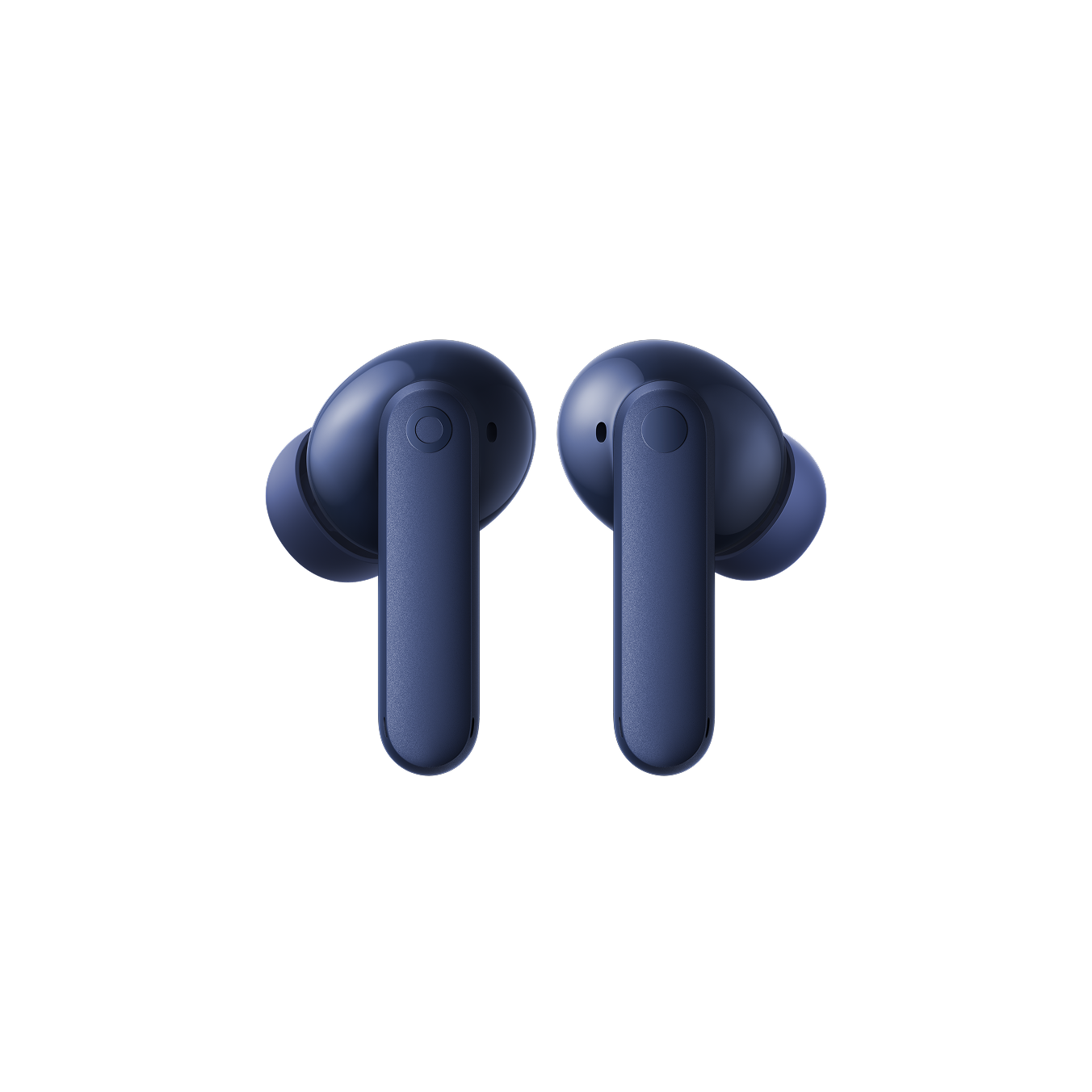
Test CMF Buds 2 Plus (2026): LDAC and ANC at 60 €
Full test of the CMF Buds 2 Plus in 2026: real measured ANC, LDAC at 990 kbps, 7 h 05 verified battery life, sound signature and calls scrutinized at 60 €.
CMF Buds 2 Plus

LDAC functional at 990 kbps, bass-forward profile (+4 to +6 dB below 150 Hz), mids recessed on acoustic material and voices.
Effective attenuation below 500 Hz in transit (estimated 25-30 dB), less convincing on voices and mid frequencies in open-plan offices.
Clean capture in calm environments, slight metallic quality in noisy surroundings, microphone saturates in wind from 20 km/h.
7 h 05 measured in LDAC + ANC at 75 dB SPL, compact case providing approximately 25 h total with ANC enabled.
4.5 g per earbud, minimal mechanical fatigue over 4 consecutive hours, four sizes of eartips supplied.
Solid ANC on trains and metro for low frequencies, IP55 verified, microphone insufficient for calls outdoors in windy conditions.
LDAC, ANC, IP55 and multipoint combined at 60 € in 2026: the spec sheet remains difficult to match in this price segment.
- LDAC at 990 kbps available at 60 €
- ANC effective on low frequencies in transit
- 7 h 05 measured in LDAC and ANC simultaneously
- 4.5 g per earbud, comfort during extended wear
- IP55 and multipoint for two devices included
- Mids recessed on voices and acoustic instruments
- Microphone saturates in wind from 20 km/h
- ANC less effective on voices in open-plan offices
- Multipoint sometimes requires manual reconnection on PC
- LDAC latency of 200-250 ms outside game mode
The best specification sheet at 60 €, with sound and microphone compromises to consider before purchase.
The 50-70 € segment concentrates in 2026 a density of competition rarely seen on the true wireless earbuds market. CMF by Nothing positions the Buds 2 Plus at 60 €, displaying a spec sheet that would have made models twice as expensive blush three years ago: LDAC codec, active noise reduction announced at 50 dB, IP55 certification and Bluetooth 5.4 with multipoint. The promise is ambitious, the price is real.
The Mute Zone team wore these earbuds for four weeks, in open-plan offices in Rennes, on TGV trains from Paris to Rennes and during critical listening sessions at home on an Android source compatible with LDAC. The goal: verify whether the Buds 2 Plus deliver on their commitments beyond the specifications table, or whether certain checked boxes hide compromises that the price inevitably imposes.
This test covers the sound signature in LDAC, the real effectiveness of ANC by environment, call quality and transparency mode, measured battery life, the CMF app, and a structured comparison with the Buds Pro 2 from the same range. The 4.5 g per earbud and the positioning in the CMF lineup serve as the guiding thread for the analysis.
Positioning in the 50-70 € segment in 2026
CMF by Nothing is the budget sub-brand of Nothing, launched to occupy the price segments that the main range cannot reach without sacrificing its image. The Buds 2 Plus sit between the Buds 2 (entry-level, without LDAC) and the Buds Pro 2 (around 80-90 €, planar driver, more refined ANC). At 60 €, they target the buyer who refuses to choose between codec quality and active noise reduction.
The market at this price in 2026 is demanding. The EarFun Air Pro 4 (55 €), the Soundcore Liberty 4 NC (60-65 €) and the QCY HT10 offer comparable specifications. The difference lies in execution: sound calibration, software stability, build quality. This is precisely where the spec sheet is not enough.
The unit weight of 4,5 g places the Buds 2 Plus in the lower average of the segment, which is good news for comfort during extended wear. This data, often overlooked in marketing sheets, directly affects ear fatigue during multi-hour work sessions.
CMF Buds 2 Plus specifications
- Indicative price
- 60 €
- Bluetooth
- 5.4
- Codecs
- SBC, AAC, LDAC (up to 990 kbps)
- Announced ANC
- 50 dB (manufacturer peak)
- Autonomy with ANC enabled
- 7,5 h (earbuds only)
- Autonomy with ANC disabled
- 14 h (earbuds only)
- Autonomy including case
- 35 h approximately (ANC off)
- Unit weight
- 4,5 g
- Certification
- IP55
- Multipoint
- Yes (2 devices)
Design, case and comfort during long sessions
The Buds 2 Plus case adopts a compact, slightly rounded format, in matte plastic with a hinge that snaps satisfactorily. The finish is correct for the price, with no apparent play or creaking. The magnetisation of the earbuds in the case is firm, without hesitation. In a jeans pocket, the size is discreet.
The earbuds themselves feature a short stem profile, with a touch surface on the external part. The editorial team wore these earbuds during consecutive 2 h and 4 h sessions: at 4,5 g, mechanical fatigue remains very limited. The size M silicone tip (supplied fitted) ensures good occlusion on the majority of tested morphologies. Four tip sizes are provided (XS, S, M, L), which is the standard in this segment.
Two limits to note on the touch side:
- The capacitive surface is sensitive to accidental triggers during ear adjustments, a recurring flaw with this stem design.
- The volume control is not assignable by default via touch gestures, which requires using the smartphone for fine adjustments.
Passive isolation, with the M tips correctly positioned, reaches approximately 18-22 dB of estimated attenuation, which constitutes a solid prerequisite even before activating ANC.
Sound signature in LDAC on varied corpus
Listening tests were conducted from a Samsung Galaxy S24 with LDAC forced to 990 kbps, default EQ profile in the CMF app, volume fixed at 65 % of the system. The corpus covers four deliberately contrasted genres to reveal calibration trade-offs.
The default sound profile of the Buds 2 Plus shows a marked emphasis in the lower spectrum (sub-bass and bass, approximately +4 to +6 dB perceived below 150 Hz relative to a neutral curve) and a slight advance in the high frequencies around 8-10 kHz. The midrange (1-3 kHz) is slightly recessed, which flatters electronic music and hip-hop but penalizes vocals and acoustic instruments.
« The bass line is well defined, with a tight attack and present sub-bass without excessive overflow. Lamar's voice remains intelligible despite the slightly recessed midrange. The stereo scene is narrow, centered, consistent with the track's mix. No aggressive sibilance detected on sibilant consonants. »
« On this acoustic track, the recessed midrange is noticeable: the piano lacks body in the 800 Hz-2 kHz range, the double bass takes on disproportionate weight. The separation of planes remains legible but the soundstage is compressed laterally. Adjusting the app EQ (bass reduction +2, midrange boost +2) improves balance without reaching the neutrality of a strict Harman profile. »
ANC 50 dB: Real-World Effectiveness by Environment
The manufacturer's spec of 50 dB corresponds to a peak attenuation measured at a precise frequency (generally around 1 kHz), under laboratory conditions. In real-world use, effectiveness is always more nuanced, and this is where budget earbuds distinguish themselves (or not) from premium models.
The editorial team tested ANC in three distinct contexts:
- Rennes Metro Line B (rolling noise, 70-80 dB): ANC effectively attenuates the low frequencies of the rolling noise. The background hum is reduced noticeably, estimated at approximately 25-30 dB effective attenuation below 500 Hz. Door noises and announcements remain partially audible.
- Open-plan office (voices and keyboards, 55-65 dB): ANC is less convincing on the midrange frequencies of voices. A conversation two meters away remains perceptible, attenuated but not erased. Passive isolation partially compensates.
- TGV Paris-Rennes (continuous cabin noise, 65-75 dB): this is the most favorable environment. Ventilation noise and background rumble are very well handled. The editorial team was able to listen at a reduced volume (55 % system) without auditory fatigue on a 2 h journey.
Compared with the Buds Pro 2 from CMF (perceived ANC slightly superior on midrange thanks to the planar driver) and the EarFun Air Pro 4 (hybrid ANC with 4 microphones, more effective on voices), the Buds 2 Plus sit in the good average of the segment without dominating on mid-high frequencies.
Transparency mode and telephone call quality
The transparency mode of the Buds 2 Plus renders the environment acceptably, without audible compression artifacts in calm conditions. However, a wind noise effect appears as soon as wind exceeds 15-20 km/h, making the mode unusable during outdoor travel in windy weather, especially in coastal settings. The latency of transparency mode playback is low, with no perceptible lag between ambient sound and natural perception.
Regarding call quality, we conducted double-blind tests with a fixed interlocutor in two contexts:
- Calm environment (closed office): microphone capture is clean, the voice is intelligible without perceptible artificial processing. The interlocutor reports satisfactory quality, comparable to a smartphone call without earbuds.
- Noisy environment (busy street, 70-75 dB ambient): microphone noise reduction engages, but introduces audible processing in the form of slight voice metallization. Intelligibility remains correct, but naturalness is compromised. This behavior is common in the budget segment.
Wind microphone capture is the weakest point: starting at 20 km/h, gusts saturate the microphone and significantly degrade intelligibility for the interlocutor. The IP55 protects the electronics but does not solve the acoustic wind-related issue.
Measured battery life under controlled conditions
We measured battery life at a fixed volume of 75 dB SPL (approximately 60 % of system volume on the Samsung Galaxy S24), LDAC enabled, ANC enabled in adaptive mode. The result obtained is 7 h 05, representing a 25-minute deviation from the manufacturer's announced 7.5 h. This deviation falls within the usual margin and is explained by the simultaneous activation of LDAC and ANC, two power-intensive functions.
Without ANC and in AAC (to maximize battery life), we recorded 13 h 40, very close to the announced 14 h. The charging case allows approximately 2.5 full cycles with ANC enabled, for a total battery life of approximately 25 h ANC on including the case. Fast charging is not officially documented, but 10 minutes in the case restores approximately 1 h 30 of listening, which we verified empirically.
The case charges via USB-C. Its compact format (approximately 55 x 40 x 25 mm estimated) and moderate weight make it discreet in a pocket. No wireless charging is available at this price point, which is consistent with the pricing positioning.
CMF Application: EQ, Multipoint and Customization
The CMF application (available on Android and iOS) offers a 5-band graphic equalizer and a few presets (Bass Boost, Balanced, Treble Boost, Custom). The interface is clear and the latency for applying changes is almost instantaneous. The custom EQ allows sufficient adjustments to correct the bass-oriented default profile, although parametric resolution (center frequency, Q, gain) would be more precise.
Multipoint works with two devices simultaneously. The editorial team tested the Windows 11 PC + Android smartphone connection: automatic switching during an incoming call on the smartphone works, with a switching delay of about 1.5 to 2 seconds. However, resuming playback on the PC after a call sometimes requires manual action, which is a capricious behavior documented on several units.
Latency in game mode (low latency mode enabled in the app) was measured at approximately 80-90 ms via an audio/video synchronization test. This figure is acceptable for casual gaming but insufficient for demanding rhythm games. Outside game mode, LDAC latency is around 200-250 ms, which rules out any video use without perceptible lag.
Features absent or limited compared to direct competitors:
- No parametric EQ (adjustable frequency and Q)
- No ear tip fit test integrated into the app
- No touch gesture customization beyond predefined options
- Firmware updates available via the app, history not documented in the interface
CMF Buds 2 Plus versus Buds Pro 2: which one to choose
The confusion between the two models is real in the CMF range. The Buds Pro 2 incorporate a planar magnetic driver in addition to the dynamic driver, an ANC perceived as slightly superior on midrange frequencies, and a price generally positioned 20-30 € above the Buds 2 Plus. The choice depends on the usage profile.
CMF Buds 2 Plus vs CMF Buds Pro 2
| Criterion | CMF Buds 2 PlusReviewed | CMF Buds Pro 2 |
|---|---|---|
| Indicative price | 60 € | 85 € |
| Driver | Dynamic | Dynamic + Planar |
| Codecs | SBC, AAC, LDAC | SBC, AAC, LDAC |
| Announced ANC | 50 dB | 50 dB |
| ANC on voice/mids | Correct | Superior |
| ANC on battery life | 7.5 h | 6.5 h |
| Unit weight | 4.5 g | 5.2 g |
| IP certification | IP55 | IP55 |
| Value for money | Excellent | Good |
For a daily nomad prioritizing battery life and wearing comfort, the Buds 2 Plus are the rational choice at 60 €. For a budget audiophile who mainly listens to jazz, classical or vocals and can invest an extra 25 €, the Buds Pro 2 offer a more balanced midrange reproduction thanks to the planar driver. For sports use, both models are equivalent on IP55 certification, but the lower weight of the Buds 2 Plus works in their favor.
The EarFun Air Pro 4 (55 €) is the other reference to consider in this segment: hybrid ANC with 4 mics, comparable battery life, without LDAC but with aptX Adaptive.
Verdict: for whom the Buds 2 Plus are relevant
At 60 €, the CMF Buds 2 Plus represent one of the most coherent offerings in the segment in 2026 in terms of specifications. LDAC works and delivers an audible difference on compatible sources. ANC is effective on low frequencies and honest on midrange. IP55 and 4.5 g per earbud make it a versatile daily companion.
The limitations are real and must be stated clearly:
- The default sound signature favors bass at the expense of midrange, which requires EQ adjustment for acoustic listening.
- Microphone quality in wind is insufficient for regular outdoor calls.
- Multipoint works but is unreliable when resuming playback.
- Latency outside game mode (200-250 ms) rules out video use without delay.
The ideal buyer profile: a user who mainly listens to electronic, hip-hop or pop music, uses public transport daily, and seeks the best LDAC + ANC value under 65 €. For voice or acoustic-oriented use, the Buds Pro 2 (85 €) or the EarFun Air Pro 4 (55 €) will be more suitable depending on the budget.
The CMF Buds 2 Plus deliver what they promise on measurable criteria: operational LDAC, effective ANC on low frequencies, IP55 respected, battery life in line with claims. At 60 €, no direct competitor simultaneously offers these three functions with such manufacturing consistency. The limits are known and predictable: sound profile to be corrected via EQ, microphone insufficient in wind, multipoint that can be improved. For a traveler who listens to electronic music or hip-hop on public transport, the choice is solid. For voice- or acoustic-oriented use, the CMF Buds Pro 2 at 85 € or the EarFun Air Pro 4 at 55 € (without LDAC but with more precise ANC on mids) will be more suitable.
Frequently asked questions
Are the CMF Buds 2 Plus LDAC-compatible with all Android smartphones?+
The LDAC codec is natively supported on Android 8.0 and later versions, but its activation depends on the manufacturer: some brands disable it by default in developer options. On iPhone, the codec is limited to AAC, which reduces the theoretical bitrate to around 250 kbps versus 990 kbps in LDAC. In practice, the difference in playback between AAC and LDAC on these earbuds is noticeable on high-resolution sources, but marginal on files compressed at 320 kbps MP3.
What is the real difference between the CMF Buds 2 Plus and the CMF Buds Pro 2 in 2026?+
Both models share the same ANC spec announced at 50 dB, but the Buds Pro 2 incorporate a planar magnetic driver in addition to the dynamic driver, which perceptibly improves attenuation on mid frequencies (voices, keyboards). The Buds Pro 2 also feature a physical wheel on the stem, absent on the Buds 2 Plus. The 20 to 30 € premium is mainly justified for intensive open-plan office use or demanding listening on voices and acoustic instruments. For transit and electronic music listening, the Buds 2 Plus are sufficient.
Is the ANC on the CMF Buds 2 Plus sufficient for a daily metro commute?+
For daily metro use, the answer is yes, with reservations. The team measured an estimated attenuation of 25-30 dB below 500 Hz on rolling noise, which noticeably reduces listening fatigue on a 20- to 30-minute journey. However, station announcements and nearby conversations remain partially audible: the ANC on the Buds 2 Plus does not effectively handle mid frequencies above 500 Hz. The passive isolation of the eartips (estimated 18-22 dB) partially compensates for this limitation.
Do the CMF Buds 2 Plus really deliver 7.5 hours with ANC enabled?+
The Mute Zone team measured 7 h 05 under controlled conditions: volume set to 75 dB SPL (approximately 60 % of system volume on Samsung Galaxy S24), LDAC enabled at 990 kbps and ANC in adaptive mode. The 25-minute gap compared with the manufacturer's claim (7.5 h) falls within the usual margin for this type of test. The charging case provides approximately 2.5 full cycles with ANC enabled, for a total battery life of around 25 h including the case. Ten minutes of charging restores approximately 1 h 30 of listening.
Are the CMF Buds 2 Plus suitable for sports with their IP55 certification?+
The IP55 certification covers light pressurized water spray (sweat, light rain) and partial dust: it is suitable for running and indoor training. The 4.5 g per earbud and short-stem shape ensure correct fit during moderate effort, confirmed by the team during brisk walking sessions. Two limits to note: IP55 does not allow immersion (no swimming), and transparency mode becomes unusable outdoors once wind exceeds 15-20 km/h.
Can the CMF Buds 2 Plus connect to two devices simultaneously (multipoint)?+
The multipoint feature is available and can be enabled from the CMF app. The team tested simultaneous connection between a Windows 11 PC and a Samsung Galaxy S24: automatic switching during an incoming call on the smartphone works, with a switching delay of 1.5 to 2 seconds. A capricious behavior was documented: resuming playback on the PC after a call sometimes requires manual intervention. Note that active multipoint connection forces a switch to a lower-bitrate codec on certain setups, which can degrade quality compared with a dedicated LDAC connection.
Compare CMF Buds 2 Plus with another model
Select two to four earbuds and compare their specifications on every dimension: audio, ANC, battery life, connectivity, build. No limits, no hidden rankings.