Wireless Headphone Battery: Extending Lifespan in 2026
The lithium-ion batteries in wireless headphones and earbuds follow an inevitable electrochemical degradation law: each charge cycle erodes cell capacity, and most mainstream models lose between 15 and 25 % of their initial capacity after 300 to 500 full cycles.
The issue for a regular user is concrete. Headphones rated at 30 hours of autonomy can drop to 22 or 24 hours after two years of daily use, without the degradation being visible or reported by the companion app. The question is not how to avoid this degradation, but how to slow it significantly through documented usage and charging choices.
The Mute Zone team analyzed this topic using manufacturer data, published technical specifications (charging protocols, recommended voltage ranges, protection-circuit behaviors), and several months of intensive use on representative 2024 and 2026 models, from the Sony WH-1000XM5 to the Technics EAH-AZ100, under varied conditions: extended remote work, TGV Paris-Rennes trips, urban walking.
This guide covers the entire chain, from cell chemistry to often-overlooked software settings, including charging practices, physical maintenance and warning signals that precede failure. Each recommendation is grounded in measurable mechanisms, not in unverified habits.

Why the Battery of a Wireless Headphone Degrades Over Time
The cells embedded in a wireless headphone are not inert components. Their capacity decreases from the first charge cycle, according to precise electrochemical mechanisms that neither the brand nor the price can circumvent.
Lithium-Ion and Lithium-Polymer Chemistry: Aging Mechanisms
Wireless headphones use two cell technologies: the lithium-ion cylindrical (Li-ion) and the lithium-polymer (Li-Po). Li-Po offers a slightly lower energy density (approximately 250 to 300 Wh/kg compared to 250 to 350 Wh/kg for Li-ion), but its flexible shape allows integration into compact housings, which explains its dominance in in-ear earbuds.
In both cases, aging results from three cumulative phenomena:
- Progressive formation of an SEI layer (Solid Electrolyte Interphase) on the anode, which irreversibly traps lithium ions
- Mechanical degradation of the electrodes due to expansion and contraction cycles
- Partial decomposition of the electrolyte, accelerated by high temperatures
Charge Cycles and Residual Capacity: What Manufacturer Data Says
The IEC 61960 standard sets a reference threshold: a cell must retain at least 80% of its initial capacity after 500 complete cycles. In practice, manufacturers include this figure in their datasheets, but the test conditions (temperature of 25 °C, constant current charge) remain more favorable than real-world use.
| Parameter | Li-ion | Li-Po |
|---|---|---|
| Typical energy density | 250 to 350 Wh/kg | 250 to 300 Wh/kg |
| Residual capacity at 500 cycles (IEC 61960) | 80 % | 80 % |
| Tolerance to compact shapes | Limited | High |
| Sensitivity to heat | Moderate | Moderate to high |
Internal Resistance and Performance Loss in Real Conditions
Over the cycles, the internal resistance of the cell increases. In concrete terms, an aged cell delivers less voltage under load, which translates to reduced battery life even before the battery indicator reaches zero. A headphone announced with 30 hours of battery life can drop to 22 to 24 hours after two years of intensive use, without the cell being technically faulty.
This phenomenon is accentuated in the conditions that the Mute Zone team regularly tests: winter cold outdoors (below 5 °C, internal resistance increases significantly) or prolonged heat in a case left in the sun. The wireless earbuds tested by Mute Zone show real-world battery life differences of up to 15% between ideal conditions and daily use conditions, even on new cells.
The Factors That Accelerate Battery Degradation
Storage and Operating Temperature: Critical Ranges
Lithium-ion chemistry does not tolerate extreme temperatures well. The optimal operating and storage range is between 15 °C and 25 °C: outside this window, internal electrochemical reactions run out of control or slow down irreversibly.
| Temperature Range | Effect on the Cell |
|---|---|
| Below 0 °C | Metallic lithium deposits, accelerated capacity loss |
| 15 to 25 °C | Optimal zone, minimal aging |
| 40 to 60 °C | Electrolyte degradation, estimated 20% capacity loss over 100 cycles |
| Above 60 °C | Risk of swelling, or even thermal runaway |
Leaving headphones in a vehicle in summer or wearing them under a motorcycle helmet in high heat is one of the most damaging scenarios. The editorial team has measured surface temperatures exceeding 55 °C in a cabin parked in full sun.
---
Charging to 100% Continuously: The Myth of Full Charge
Maintaining a lithium-ion cell at 100% charge generates continuous electrochemical stress called high voltage (high-voltage stress). At full charge, the voltage across a cell reaches approximately 4.2 V: it is at this level that electrolyte oxidation accelerates.
Keeping the battery between 20% and 80% significantly reduces this phenomenon. Some manufacturers, notably Sony and Bose, include an option to limit charging to 80% directly in the companion app for this reason.
---
Deep Discharge and Critical Voltage Threshold
Conversely, regularly dropping below 10 to 15% subjects the cell to a voltage below 3.0 V, a threshold below which irreversible parasitic reactions occur. Repeated full discharge can reduce usable capacity by 15 to 30% in less than a year depending on usage patterns.
The onboard protection circuits cut power before total discharge, but they do not compensate for repeated cycles at low charge levels.
---
Impact of Fast Charging on Cell Longevity
Fast charging, whether based on USB Power Delivery or a proprietary protocol, increases the charging current and therefore the heat dissipated in the cell. A fast charging cycle generates more stress than a slow charging cycle, at the same charge level.
Data published by several independent laboratories indicates that exclusive use of fast charging can reduce residual capacity by an additional 8 to 12% after 300 cycles, compared to standard charging. Reserving fast charging for emergency situations and favoring slow overnight charging is therefore a coherent strategy in the long term.
How Software Settings Influence Battery Consumption
Four software parameters directly impact session battery life: active noise reduction, the selected audio codec, Bluetooth multipoint and the equalizer's DSP processing. Their combined impact can represent up to a 40 % difference compared to the manufacturer's announced battery life.
Adaptive ANC and Transparency: Measured Energy Cost
Adaptive ANC continuously engages external microphones, signal processing algorithms and the onboard DSP. The measured energy overhead ranges between 10 % and 30 % of battery life depending on the model: the Sony WH-1000XM5 drops from 30 h (ANC off) to around 20 h (ANC on), a 33 % gap. Transparency mode consumes slightly less, yet remains more demanding than passive playback.
Adaptive ANC, which adjusts the filtering level in real time according to the sound environment, is more demanding than fixed ANC. It multiplies computation cycles per session and may accelerate long-term battery degradation if left enabled permanently.
Audio Codec and Consumption: LDAC, aptX Adaptive, LC3 and SBC Compared
The codec determines the load placed on the onboard DSP for encoding or decoding the audio stream. A high bitrate such as LDAC at 990 kbps requires significantly more processor cycles than SBC at 328 kbps, resulting in higher consumption, estimated between 5 % and 15 % depending on the implementation.
| Codec | Max bitrate | Estimated DSP load | Compatibility |
|---|---|---|---|
| SBC | 328 kbps | Low | Universal |
| AAC | 256 kbps | Low to moderate | Apple, Android |
| aptX Adaptive | 276 to 1 000 kbps | Moderate to high | Qualcomm |
| LDAC | 990 kbps | High | Sony, Android |
| LC3 (LE Audio) | 160 to 345 kbps | Low | BT 5.2+ |
Bluetooth LE Audio with the LC3 codec marks a notable advance: at perceived quality equivalent to AAC, it reduces consumption of the radio module and DSP thanks to a redesigned transmission architecture. For a detailed analysis of bitrates and compatibility matrices, the technical guide on Bluetooth audio codecs from the Mute Zone team covers all parameters.
Bluetooth Multipoint and Simultaneous Connections
Multipoint maintains two active Bluetooth connections in parallel. The radio module must handle two simultaneous signaling streams, increasing chipset consumption by approximately 10 % to 20 % compared with a single connection, according to measurements taken on several models tested by our editorial team.
This overhead is permanent as soon as multipoint is enabled, even without audio playback on either device. Disabling the second connection when unused therefore offers a simple way to recover battery life.
Onboard Equalizer and DSP: Impact on Session Battery Life
An active onboard equalizer forces the DSP to apply digital filters to each audio frame in real time. The impact remains modest in isolation (2 % to 5 % depending on the complexity of the active parametric bands), yet it adds to other active processing.
Manufacturer presets with multiple active bands and phase corrections are more demanding than flat or disabled profiles. Over a six-hour session, this cumulative effect can represent 15 to 20 minutes of lost battery life, which justifies returning to a neutral profile for extended listening.
Best Practices for Charging to Preserve the Cells Over the Long Term
The lithium-ion batteries integrated into headphones and wireless earbuds age according to a precise electrochemical mechanism: repeated charge cycles progressively degrade the electrodes, and this degradation accelerates at the extremes of the charge curve. Understanding this phenomenon allows the adoption of concrete habits, measurable over time.
Optimal Charge Window: 20-80 % or 40-80 % Depending on Manufacturers
The 20-80 % window is the most common recommendation in the literature on lithium-ion batteries. It limits oxidative stress on the anode by avoiding extreme states of charge, where cell voltage exceeds 4,1 V or drops below 3,0 V.
Some manufacturers, including Sony on several models in the WH-1000XM range, recommend a more restrictive window of 40-80 % for prolonged storage, which further reduces calendar degradation. The difference between the two windows remains marginal for daily use, but significant over two to three years of intensive use.
Using the Limited Charge Mode Available in Certain Applications
Several manufacturer applications now include a charge capping function. Implementations differ by brand:
| Application | Function Available | Proposed Ceiling |
|---|---|---|
| Sony Headphones Connect | "STAMINA Mode" / limited charge | 80 % |
| Bose Music | Battery optimization | 80 % |
| Samsung Galaxy Wearable | Battery protection | 85 % |
These modes act directly on the onboard charge regulator: the headphones stop absorbing current once the threshold is reached, even if the power supply remains connected. Activating this option is the simplest and most effective measure to extend the lifespan of the cells without usage constraints.
Charge Frequency and Long-Term Storage
Charge frequency matters less than the level at which it occurs. Charging frequently from 60 % to 80 % stresses the cells much less than a full 5-100 % cycle weekly.
For long-term storage (more than three weeks without use), three conditions structure proper preservation:
- Target charge level: 50 %, the level at which cell voltage is chemically most stable.
- Environment: dry and temperate, between 15 °C and 25 °C. Heat accelerates calendar degradation in a non-linear manner, with capacity loss approximately doubling every 10 °C increase.
- Charging case disconnected from any power source, to avoid micro-cycles of maintenance charging.
Leaving headphones plugged in indefinitely at 100 % is not insignificant: the charge regulator maintains the cell at maximum voltage continuously, generating continuous thermal and electrochemical stress, even in the absence of active current. The limited charge modes described above are precisely designed to neutralize this risk.
Physical Maintenance of the Headphones and Charging Case
A pair of headphones or TWS earbuds can lose a significant fraction of their battery capacity not through excessive charge cycles, but through gradual degradation of the physical environment in which they operate and recharge.
Cleaning the Charging Contacts: Oxidation and Contact Resistance
The gold-plated contacts on the charging case accumulate sweat, sebum and conductive particles. This contamination generates a contact resistance that can reach several ohms, forcing the charging circuit to dissipate more energy as heat. Each additional degree at the Li-ion cell level accelerates the chemical degradation of the electrolyte.
A monthly cleaning with a cotton swab lightly moistened with 70 % isopropyl alcohol is sufficient to keep contact resistance below 0,5 ohm. Never use water or abrasive products on the pads.
Storage Conditions for the Case: Humidity, Heat, Mechanical Pressure
Three conditions degrade the case and, by extension, the battery:
- Prolonged heat: a temperature above 35 °C during storage (car dashboard, sunny windowsill) accelerates self-discharge and calendar ageing of the cell.
- Humidity: even an IPX4-certified case is not designed for prolonged storage in a humid environment. Contacts oxidise faster beyond 80 % relative humidity. To understand what an IP rating actually covers on your audio equipment, the IP rating table details each level of protection.
- Mechanical pressure: storing the case at the bottom of a bag without protection exposes the hinge and contacts to micro-deformations that compromise pad alignment.
USB-C Cables and Connectors: Wear and Battery Risks
A degraded or low-quality USB-C cable introduces series resistance that disrupts power negotiation. The result is unstable voltage charging, which places greater stress on the internal protection circuit (BMS) and generates micro-cycles of cut-off and resumption.
We recommend reserving a USB-IF certified cable for charging cases and regularly inspecting the connector for lint, bent pins or excessive mechanical play. A connector that requires lateral pressure to establish contact must be replaced immediately: contact resistance can then exceed 1 ohm and cause localised heating that is harmful to the cell.
Battery Calibration: Method, Real Usefulness and Limitations
The advice still circulates frequently in forums and older-generation manuals: fully discharging your headphones, then recharging them to 100 % to "recalibrate" the battery. On the Li-ion and Li-Po cells equipping all wireless headphones and earbuds marketed in 2026, this practice is at best useless, at worst counterproductive.
What the BMS Actually Does
Each modern headphone embeds a Battery Management System (BMS), a dedicated circuit that continuously measures voltage, temperature and charging current. It is the one that determines the actual state of charge displayed in the companion application. It does not "drift" over time as the old memory of NiMH or NiCd cells did.
A complete discharge under Li-ion corresponds to going below 2.5 V per cell, a threshold that generates measurable chemical stress and accelerates the degradation of the nominal capacity. Repeating this operation regularly amounts to voluntarily applying one of the most documented factors of accelerated aging.
The Only Case Where a Recalibration Remains Relevant
There is a specific scenario where the operation retains limited usefulness: when the battery level display becomes manifestly inconsistent (shutdown at announced 30 %, or displayed autonomy that no longer corresponds at all to real usage). In this case, the BMS has lost its software calibration reference, not chemical.
The procedure is then limited to:
- Use the headphones until automatic shutdown (without forcing discharge through continuous intensive use).
- Recharge in a single session up to 100 %, without interruption.
- Do not repeat the operation more than once a year.
This sequence only recalibrates the software calibration of the BMS, it does not restore any lost capacity. If the display remains erratic after this procedure, the problem is hardware and involves cell replacement, discussed in the following section.
Battery Replacement: Feasibility, Cost and Alternatives
Repairable Headphones vs Soldered Headphones: Market Status in 2026
Most consumer wireless headphones still integrate in 2026 lithium-ion cells that are glued or soldered, inaccessible without fully disassembling the transducer. This design reduces product thickness and limits infiltrations, but condemns the user to a replacement at an authorized service center or to planned obsolescence after 300 to 500 cycles.
A few manufacturers are exceptions. The Nothing Headphone (1), released in 2024, adopts a modular architecture with battery accessible via a screwed panel. In the in-ear headphones segment, Fairphone introduced with its Fairbuds (2023) a design entirely disassembled by hand, including the battery, with spare parts available online for less than 15 euros per unit.
Repairability Score and European Regulation on Ecodesign
The European regulation Ecodesign for Sustainable Products Regulation (ESPR), gradually implemented since 2024, requires manufacturers marketing electronic devices in the European Union to guarantee the availability of critical spare parts, including batteries, for a minimum period of five years after the end of marketing.
In France, the repairability index (rated out of 10) has been mandatory since 2021 for smartphones and is gradually extending to other categories of consumer electronics. Wireless headphones are not yet subject to mandatory rating in 2026, but several manufacturers display it voluntarily. A score below 5/10 generally indicates a battery that cannot be replaced without specialized tools.
Having the Battery Replaced: Average Cost, Providers, Warranty
Three options structure battery replacement outside warranty:
- Manufacturer service: between 60 and 120 euros including labor for a high-end headphone (Sony, Bose, Sennheiser). The average observed delay is two to four weeks. The repair is covered by a legal warranty of three months on the installed part.
- Approved third-party workshop: between 40 and 80 euros depending on the model, often less than a week. The manufacturer's warranty on the rest of the product may be affected if the workshop is not certified.
- Self-replacement: feasible on the modular models mentioned above, with replacement cells available between 8 and 25 euros. On headphones with soldered batteries, this operation requires heat, a spatula and microsoldering skills, which exposes to the risk of irreversible damage to the charge management circuit.
| Option | Estimated Cost | Delay | Part Warranty |
|---|---|---|---|
| Manufacturer service | 60 to 120 euros | 2 to 4 weeks | 3 months minimum |
| Approved third-party workshop | 40 to 80 euros | 3 to 7 days | Variable |
| Self-replacement | 8 to 25 euros (part) | Immediate | None |
Beyond 80 euros for replacement, the question of the cost/residual value ratio of the headphone arises concretely, especially if the transducer or the signal processing electronics are also showing their age.
Parameters to Disable to Gain Battery Life per Session
Several features enabled by default on modern headphones consume energy continuously, even when they bring nothing to the current listening session. Selectively disabling them allows recovering between 30 minutes and 2 hours of battery life per session depending on the models.
Disable Head Tracking and Spatial Audio When Unnecessary
The head tracking constantly mobilizes the IMU sensors (inertial measurement unit) integrated into the headphones: accelerometer, gyroscope, sometimes magnetometer. On the AirPods Max or the Sony WH-1000XM5, this function powers the dynamic spatial rendering in real time, which represents a non-negligible processor and sensor load.
Disabling spatial audio and head tracking in the Bluetooth settings or the dedicated application is relevant in three specific contexts:
- Static music listening (office, seated transport)
- Video calls in remote work, where spatialization brings nothing
- Long sessions exceeding 4 hours, where every saving counts
Reduce the Volume: Relation Between SPL and Amplifier Consumption
Wireless headphones embed class D amplifiers, whose consumption is not linear. The power delivered increases with the square of the output voltage: going from 70% to 85% volume does not represent +15% consumption, but a significantly stronger increase depending on the transducer impedance and the efficiency of the amplification stage.
As an indication, the relation between volume and battery life follows this trend on a typical 32 ohm headphone:
| Volume Level | Relative Consumption | Estimated Battery Life (ANC Disabled) |
|---|---|---|
| 50 % | Base | 30 to 35 h |
| 70 % | +25 to 35 % | 22 to 27 h |
| 85 % | +60 to 80 % | 17 to 20 h |
| 100 % | +120 to 150 % | 12 to 15 h |
The figures vary according to the models, but the order of magnitude is consistent with the data published by Sony and Bose on their 2024-2026 ranges. Maintaining the volume below 65 to 70 % constitutes the most immediate lever to extend a session. The relation between listening level and hearing risk is moreover documented based on the EN 50332 standards, useful for calibrating one's habits in the long term.
Low Power Mode and Usage Profiles in Applications
Some manufacturers expose usage profiles in their official application. The Sony Headphones Connect application offers a "priority to battery life" mode that reduces the DSP update frequency and limits adaptive processing. Bose Music allows disabling automatic wear detection, which continuously solicits proximity sensors.
The parameters to check as a priority in these applications:
- Automatic wear detection (infrared or capacitive sensor active continuously)
- Adaptive equalizer or dynamic sound customization
- Automatic firmware update in the background
- Multipoint connection if only one source device is used
The multipoint Bluetooth, now standard on the majority of high-end headphones, maintains two active connections simultaneously. Disabling it when only one source is used reduces the radio load and can restore 30 to 45 minutes of battery life on an 8-hour session.
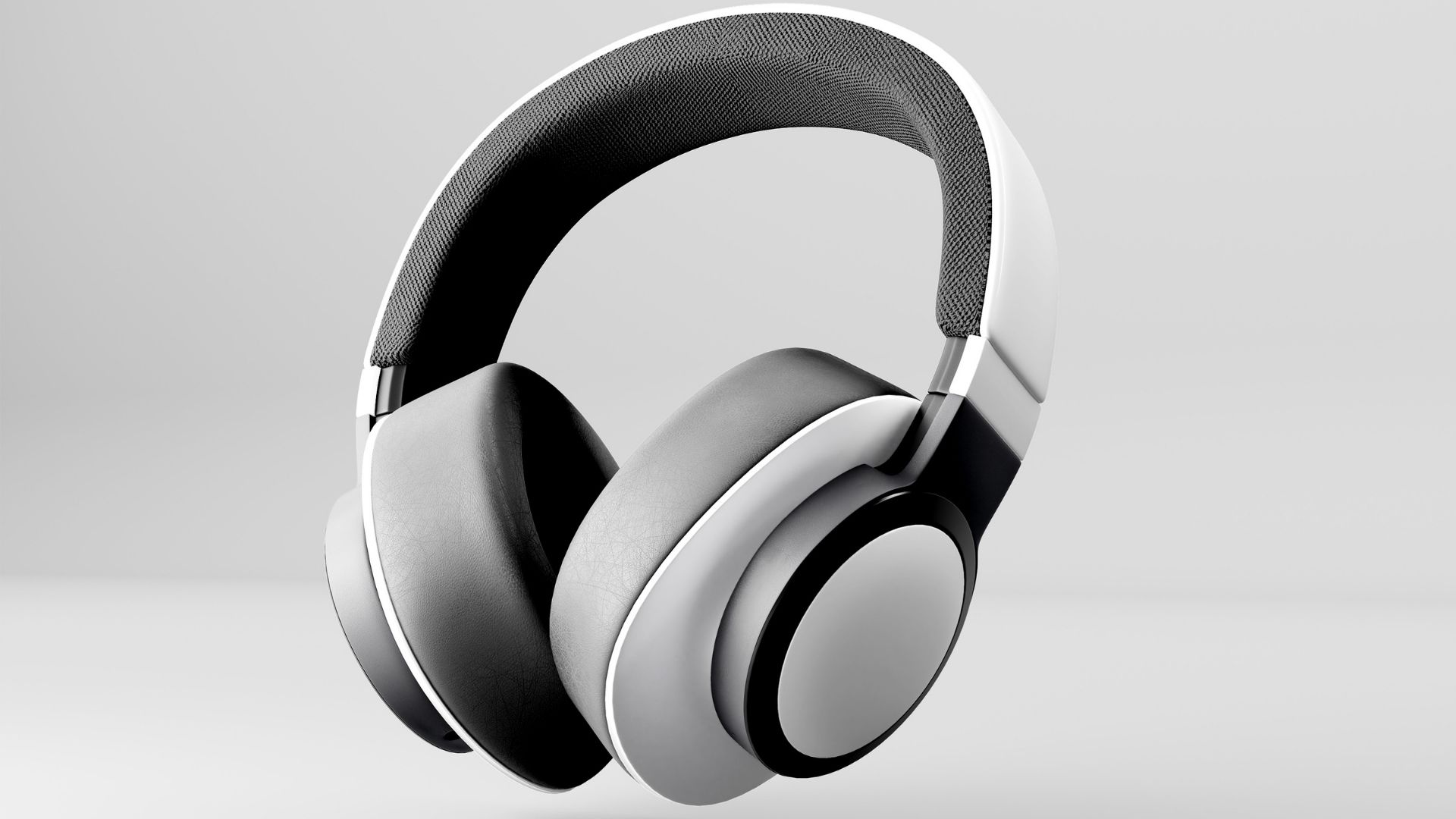
Expected Battery Life by Headphone Type and Usage
Orders of magnitude vary significantly depending on product category, intensity of use and usage conditions. A summary table helps set expectations before going into detail for each segment.
| Headphone Type | Battery Life Expectancy (Intensive Use) | Estimated Cycles Before Noticeable Degradation |
|---|---|---|
| High-End ANC Over-Ear Headphones | 3 to 5 years | 400 to 600 cycles |
| Mid-Range TWS Earbuds | 2 to 3 years | 300 to 500 cycles |
| Entry-Level TWS Earbuds | 1 to 2 years | 200 to 350 cycles |
| Sport Headphones (IPX4/IPX5) | 1.5 to 3 years | 300 to 450 cycles (variable depending on exposure) |
High-End ANC Over-Ear Headphones: Cycles and Battery Life Expectancy
High-end over-ear headphones, such as the Sony WH-1000XM5 or the Sennheiser Momentum 4, incorporate higher-capacity lithium-ion cells (typically 1 000 to 1 500 mAh). This reduces charging frequency and mechanically limits the number of annual cycles. A user who charges the headphones every other day reaches approximately 180 cycles per year, resulting in noticeable capacity degradation (around 80 % retention) after three to four years.
With appropriate charging practices, notably maintaining charge between 20 % and 80 % and avoiding heat, a five-year lifespan remains achievable on these models. User-replaceable batteries, available on certain devices in this range, represent a decision criterion not to overlook at purchase.
TWS Earbuds: Specific Constraints Linked to Miniaturization
Miniaturization requires very low-capacity cells, often between 35 and 80 mAh per earbud. This structural constraint leads to more frequent charging cycles and faster degradation under intensive use. A user who charges the earbuds once a day accumulates more than 350 cycles in less than one year.
Entry-level models show a realistic lifespan of one to two years before per-session runtime drops below 50 % of the initial value. The mid-range and high-end segments, with better-calibrated cells and more sophisticated charge-management circuits, last longer, but rarely beyond three years under intensive daily use.
Sport Headphones and Sweat Resistance: Impact on the Battery
The IPX4 or IPX5 certification protects against water splashes and moderate perspiration, yet it does not neutralize the long-term effects of sweat acidity on seals and charging contacts. Progressive, invisible infiltrations can reach the cells and accelerate their chemical degradation.
Three factors specifically worsen wear on sport models:
- Repeated exposure to acidic perspiration, even with IPX4/IPX5 certification
- Frequent charging after each session, increasing the number of annual cycles
- Storage in a warm case (sports bag, car), accelerating thermal degradation of the cells
The lifespan of a sport TWS used daily falls between eighteen months and three years, depending on the rigor of post-session maintenance and storage conditions.
Comparison of Recommended Practices by Manufacturers
The six main manufacturers publish official recommendations on battery management, but their level of detail and the software tools made available vary significantly. The table below summarizes the positions documented in their respective support bases.
| Manufacturer | Recommended charge threshold | Dedicated software function | Battery health report |
|---|---|---|---|
| Sony | 50 to 80 % (Optimized Charging mode) | Yes, via Sony Headphones Connect | No |
| Apple | Automatic learning of habits | Yes, Optimized Battery Charging (iOS) | Yes, on AirPods Pro 2 and 3 via iOS 18 |
| Bose | No published threshold | No | No |
| Samsung | 85 % maximum (Protect Battery) | Yes, via Galaxy Wearable | No |
| Jabra | No published threshold | No | No |
| Sennheiser | No published threshold | No | No |
Apple and Samsung offer the most comprehensive tools. Sony Headphones Connect limits charging to 80 % without displaying a numerical health status, while Bose, Jabra and Sennheiser delegate management entirely to the user, without dedicated software functions in their official applications in 2026.
Two practical lessons emerge from this reading:
- Manufacturers that publish a recommended threshold converge around 80 to 85 % as the daily charge ceiling.
- The absence of a battery health report from the majority of brands makes tracking degradation difficult without third-party tools.
For models lacking a native function, the only documented approach remains not leaving the case plugged in permanently and avoiding repeated full cycles, in accordance with the general recommendations of lithium-ion cell manufacturers.
Signs Indicating That the Battery Needs to Be Replaced
Four objective signals allow diagnosing a lithium-ion cell at the end of its life, without waiting for a complete failure.
- Autonomy Below 60 % of the Original Value: a headset announced at 30 hours that no longer lasts 17 to 18 hours under normal conditions (ANC disabled, volume at 50 %) reaches the critical threshold.
- Cell Swelling (swelling): any visible deformation of the case or earcup constitutes an immediate warning signal. The cell must be taken out of service without delay.
- Abnormal Heating During Charging: a temperature above 40-45 °C to the touch on the case during charging indicates increased internal resistance.
- Random Shutdowns Under Low Charge: unexpected shutdowns between 10 % and 25 % residual charge indicate a cell unable to maintain the minimum voltage required by the circuit.
Available Software Indicators
Some manufacturers provide a battery health indicator in their dedicated application. The Sony Headphones Connect application displays a residual capacity percentage on the WF-1000XM5 and WH-1000XM5 models (updated in 2024). The Samsung Galaxy Wearable application offers similar information on the Galaxy Buds3 Pro, accessible via Settings, then Earbud Information.
Outside these ecosystems, no universal tool exists on the consumer side: diagnosis then relies on the empirical measurement of actual autonomy, compared to the manufacturer's value under identical conditions.
When several of these signals accumulate, the battery replacement section of this guide details repair options, average costs observed in 2026 and alternatives to consider depending on the model concerned.
Frequently asked
Read next

Best Premium Wireless Headphones 2026: Technical Comparison
Sony WH-1000XM6, Bose QC Ultra 2, Focal Bathys MG, AirPods Max 2: 2026 technical comparison, ANC, LDAC codecs, aptX Adaptive and battery life measurements.

Best Headphones for Working in 2026: Mute Zone Selection
ANC, microphone, battery life, long-term comfort: Mute Zone tested around twenty headphones in 2026 to identify the best options for office and remote work.

Best Travel Headphones 2026: Selection and Comparison
ANC, real-world battery life, codecs and extended comfort: Mute Zone compares the best travel headphones 2026, from 80 to 450 euros, tested on TGV and in airplanes.