Best Premium Wireless Headphones in 2026: Comparison
The premium wireless headphones segment brings together in 2026 products priced from 350 to 650 euros, featuring deeply heterogeneous technical architectures: adaptive multi-microphone noise reduction, high-resolution codecs such as LDAC (up to 990 kbps) or aptX Adaptive, 30 to 40 mm composite-membrane drivers, and growing integration of Bluetooth LE Audio on select references.
The challenge for the buyer is not to find the "best" headphone in an absolute sense, but to identify which model optimizes the right parameters according to real-world use: effective ANC in open space, tonal fidelity over long listening sessions, ANC-on battery endurance, or seamless operation within a specific software ecosystem. These criteria do not always overlap, and several highly rated models fall short on one of them.
The Mute Zone team tested or technically analyzed seven references for this guide: the Sony WH-1000XM6, the Bose QuietComfort Ultra 2, the Sennheiser HDB 630, the Apple AirPods Max 2, the Focal Bathys MG, the AKG N9 Hybrid and the Nothing Headphone (a). Tests included TGV Paris-Rennes sessions, extended remote-work periods and noisy open-space environments, with passive attenuation measurements and battery-life readings at a calibrated volume of 75 dB SPL.
This guide structures the analysis in two stages: objective technical criteria first, followed by model profiles, so that each final recommendation is readable in context and verifiable in its foundations.

Our Top 5 at a glance
The five models to know on this topic, ranked by use-case fit. Full technical details below, price comparison in one click.
- 01
 SONYWH-1000XM6Circum-aural
 - 02
 BOSEBose QuietComfort Ultra Headphones (2nd Gen)Circum-aural
Comparative Table of the Best High-End Wireless Headphones in 2026
Six models structure this comparison: the established market references, audiophile alternatives and one accessible newcomer. The data below come from manufacturer specifications and measurements available in the first half of 2026. ANC attenuation is expressed in dB of combined passive and active reduction, as communicated by manufacturers or measured by independent laboratories.
| Model | Indicative Price | Max Codec | ANC (measured attenuation) | Announced Battery Life | Weight | Multipoint |
|---|---|---|---|---|---|---|
| Sony WH-1000XM6 | 380 € | LDAC (990 kbps) | Adaptive, up to 40 dB | 40 h (ANC on) | 254 g | Yes (2 devices) |
| Bose QuietComfort Ultra 2 | 430 € | aptX Adaptive / LC3 | Adaptive, up to 45 dB | 45 h (ANC on) | 250 g | Yes (2 devices) |
| Sennheiser HDB 630 | 450 € | LDAC / aptX Adaptive | Hybrid, approximately 35 dB | 60 h (ANC off) | 233 g | Yes (2 devices) |
| Apple AirPods Max 2 | 549 € | AAC / LC3 (USB-C) | Adaptive, approximately 38 dB | 30 h (ANC on) | 442 g | Yes (Apple ecosystem) |
| Focal Bathys MG | 799 € | LDAC / aptX Adaptive | Hybrid, approximately 30 dB | 30 h (ANC on) | 360 g | No |
| Nothing Headphone (a) | 249 € | LDAC / aptX Adaptive | Hybrid, approximately 32 dB | 40 h (ANC on) | 238 g | Yes (2 devices) |
Reading the Table: Three Points of Attention
Several columns require clarification before proceeding further.
The max codec listed assumes source-side compatibility. A recent Android smartphone will activate LDAC or aptX Adaptive depending on the manufacturer, yet an iPhone remains limited to AAC outside LC3. To understand the implications in bit rate and latency, the technical guide on Bluetooth codecs details the full compatibility matrix.
The battery life announced by manufacturers corresponds systematically to laboratory conditions: volume at 50 %, ANC enabled, SBC or AAC codec. In real-world use with LDAC and ANC at full power, the figures drop by 15 to 25 % depending on the models. The section dedicated to real-world battery life, later in this guide, quantifies these differences model by model.
The weight of the AirPods Max 2 (442 g) clearly sets them apart from the rest of the comparison. This figure has direct consequences on comfort during prolonged wear, addressed in the ergonomics section.
Technical Criteria for Choosing a High-End Wireless Headphone
The quality of a high-end wireless headphone is not limited to a well-presented specification sheet. Four axes structure the rigorous analysis of a model: the audio codec used, the measured effectiveness of noise reduction, the sound signature relative to a reference target, and Bluetooth multipoint management.
Audio Codecs: LDAC, aptX Adaptive, LC3 and AAC
The codec determines the amount of sound information transmitted wirelessly between the source and the headphones. The differences in bit rate are significant and directly condition the perceived resolution.
| Codec | Max Bit Rate | Typical Latency | Main Platform |
|---|---|---|---|
| SBC | 328 kbps | 150 to 200 ms | Universal (classic Bluetooth) |
| AAC | 250 kbps (variable) | 100 to 150 ms | iOS (stable), Android (variable) |
| LDAC | 990 kbps | 80 to 120 ms | Native Android 8+, Sony priority |
| aptX Adaptive | up to 1 Mbps | 50 to 80 ms (LL mode: 50 ms) | Qualcomm Android, Windows |
| LC3 (LE Audio) | 160 to 345 kbps | 20 to 40 ms | Bluetooth 5.2+, Android 13+ |
LDAC transmits up to 990 kbps in high-quality mode, three times the bit rate of AAC. In practice, the headphones automatically switch to 660 kbps or 330 kbps depending on radio signal quality, which makes the actual bit rate dependent on the environment. On iOS, LDAC is not supported natively: most headphones fall back to AAC, whose implementation varies greatly among Android manufacturers.
aptX Adaptive reaches up to 1 Mbps and incorporates adaptive latency, reduced to approximately 50 ms in game mode. This codec remains limited to devices equipped with a compatible Qualcomm chip, which excludes the entire Apple ecosystem and part of the mid-range Android devices.
LC3, the Bluetooth LE Audio codec, offers better efficiency at low bit rates than SBC: at 160 kbps, the perceived quality exceeds that of SBC at 328 kbps according to measurements published by the Bluetooth SIG. Its latency of 20 to 40 ms makes it usable for video and gaming. Its deployment is still ongoing in 2026, conditioned on the adoption of the Bluetooth 5.2 standard on both source and headphones. For a detailed analysis of compatibility matrices, the Mute Zone technical guide on Bluetooth codecs lists the validated source/headphone combinations.
Adaptive ANC: How to Measure the Real Effectiveness of Active Noise Reduction
Product sheets generally limit themselves to formulas such as "cutting-edge ANC" without providing an attenuation value. Independent measurements, carried out in an anechoic chamber according to the ISO 11904 standard, allow objective comparisons.
The best over-ear headphones on the market in 2026 reach the following values:
- Attenuation in low frequencies (100 to 250 Hz): 25 to 35 dB for reference models
- Attenuation in midrange (500 Hz to 2 kHz): 20 to 30 dB, critical zone for the human voice and announcements
- Attenuation in high frequencies (above 4 kHz): 5 to 15 dB, where ANC loses effectiveness and passive isolation takes over
The adaptive mode adjusts the attenuation level in real time according to ambient noise detected by the external microphones. This adaptation avoids the sensation of ear pressure generated by fixed full-power ANC in a calm environment. On the other hand, sudden transients (door slam, sudden announcement) can cause a brief sound artifact before the algorithm recalibrates.
Real effectiveness also depends on the fit of the headphones on the head: an acoustic leak at the earpads reduces passive attenuation and degrades the coherence of the hybrid feedforward/feedback system.
Sound Signature and Harman Curve: What Measurements Reveal
The Harman target (over-ear version 2018, regularly updated) is the frequency response curve deemed preferable by the majority of listeners during blind tests conducted by Sean Olive and his teams. It serves as a comparative reference in measurements published by independent laboratories.
Concretely, the over-ear Harman target presents:
- A slight bass boost below 200 Hz (approximately 6 dB of progressive gain toward the sub-bass)
- A relatively neutral midrange response between 200 Hz and 2 kHz
- A presence peak around 3 kHz, consistent with the natural resonance of the ear canal
- A progressive attenuation of highs beyond 8 kHz
Deviating from this target downward (accentuated bass boost, recessed mids) produces a so-called "V-shaped" signature, flattering on rock or electronic music, but which masks harmonic details on classical or acoustic jazz. A deviation upward (reinforced presence between 2 and 5 kHz) generates a more analytical signature, perceived as fatiguing over long sessions.
Product sheets never mention these deviations. Only frequency response curves measured under standardized conditions (HATS, Head and Torso Simulator) make it possible to objectify these design choices. A 4 dB dip around 3 kHz or a 5 dB excess in the sub-bass are decision-making pieces of information that marketing does not communicate.
Bluetooth Multipoint and Bluetooth LE Audio: Uses and Limits in 2026
Bluetooth multipoint allows two simultaneous active connections to be maintained, for example a computer and a smartphone. The handling of an incoming call on the second device varies according to implementations: some headphones automatically switch to the source generating the call, others require manual action via the application or a physical button.
In practice, three structural limits remain in 2026:
- Automatic switching is sometimes erratic on VoIP calls (Teams, Zoom) that do not send the same trigger signal as a GSM call
- The active codec often degrades during multipoint: headphones in LDAC on Android may fall back to SBC as soon as a second source is connected
- Some models limit multipoint to two devices and do not allow a third to be added
Sony WH-1000XM6: Complete Technical and Sound Analysis
Released in 2025, the Sony WH-1000XM6 is based on the QN3 processor, the third generation of the company's dedicated noise reduction chip. This component simultaneously drives multiple microphones (feedback, feedforward, and reference) to adjust ANC in real time according to the ambient noise profile.
Measured ANC and Transparency Performance
The passive attenuation of the earcup reaches approximately 20 dB even before the electronics are activated. The QN3 brings the total measured attenuation to around 35 to 38 dB on the mid-low frequencies (100 to 1 000 Hz), a level that places the headphones among the two or three references in the segment in 2026. On high frequencies (beyond 4 kHz), effectiveness drops noticeably, a behavior common to the entire category.
The transparency mode restores the environment with limited coloration, slightly behind on fast transients compared to the Bose QuietComfort Ultra Headphones (2nd Gen). Automatic adaptation to context (voice detection, environment change) works reliably, without unwanted switching observed during tests in open-space and on the Paris-Rennes TGV.
LDAC Codec and Real-World Audio Quality
| Codec | Max Bitrate | Typical Latency | Platform |
|---|---|---|---|
| SBC | 328 kbps | 200-250 ms | Universal |
| AAC | 256 kbps | 120-150 ms | iOS / macOS optimized |
| LDAC | 990 kbps | 200-330 ms | Android (Qualcomm not required) |
The LDAC at 990 kbps is the XM6's strong point on Android: playback gains resolution on the upper mids (2 to 5 kHz) and the soundstage widens noticeably compared to SBC. However, in a congested Bluetooth environment (dense open-space, public transport), the codec automatically falls back to 660 kbps or 330 kbps. At 330 kbps, the advantage over high-quality AAC becomes marginal. This behavior is inherent to the LDAC protocol, not specific to the XM6; for more detail on this mechanism, the technical guide on Bluetooth codecs explains the degradation conditions and decision matrices by use case.
Two structural limitations deserve mention for 2026:
- Absence of aptX Adaptive, which excludes Qualcomm device users seeking reduced latency (below 80 ms) without using the proprietary game mode.
- No native Bluetooth LE Audio, therefore no Auracast compatibility or LC3 codec, while several direct competitors integrate this architecture.
Tonally, the XM6 signature moves slightly away from that of the WH-1000XM5: the lower mids (200 to 500 Hz) are less bloated, which improves vocal clarity. Treble remains slightly recessed beyond 8 kHz, a signature that favors extended listening but may frustrate listeners seeking analytical reproduction on cymbals and upper harmonics.
Comfort, Build and Battery Life
At 254 g, the XM6 sits in the lower average of the high-end over-ear segment. The viscoelastic foam earpads distribute pressure across the entire pinna, with no compression points identified on glasses wearers during three-hour continuous sessions. The headband adjusts over a wide range, with an earcup rotation mechanism that facilitates flat storage.
The announced battery life reaches 40 hours with ANC on, a value that we measured at approximately 37 hours in mixed use (LDAC, ANC at 70 %, volume at 50 %). Fast charging via USB-C restores about 3 hours of listening after 3 minutes of charge, useful data for a rushed departure. Charging practices that preserve battery longevity over time are documented in our guide on extending wireless headphone battery life.
The build uses rigid plastics with metal hinges, without official IP certification. The assembly inspires confidence for daily use, but the lack of moisture resistance rating remains a limitation for outdoor use in Breton rain.
Bose QuietComfort Ultra 2: the reference headphones for ANC
The Bose QuietComfort Ultra Headphones (2nd Gen) stands out in 2026 as the most cited reference when it comes to active noise reduction. With a weight kept to 250 g and an announced autonomy of 45 h, it targets the nomadic user who places sound isolation at the top of their priorities.
CustomTune and Adaptive ANC: Operation and Effectiveness
The CustomTune system performs an automatic calibration each time the headphones are worn: a test signal is emitted by the transducers, captured by the internal microphones, and the DSP processing adjusts in real time the frequency response and ANC level according to the geometry of the ear canal and the acoustic coupling of the earcups. This measurement lasts about one second and occurs without user intervention.
The measured effectiveness of the ANC ranks among the two best on the market, with combined passive and active attenuation exceeding 40 dB on low and low-mid frequencies (80 Hz to 1 kHz), where most competitors plateau between 30 and 35 dB in this range. On high frequencies (beyond 4 kHz), attenuation remains more modest, which is a common limit across the entire segment.
Adaptive ANC dynamically adjusts its level according to the detected sound environment, without requiring manual switching between profiles. In practice, we tested this behavior in open-space offices and on the Paris-Rennes TGV: the transition between calm and noisy environments occurs without notable audible artifacts.
Immersive Audio and Spatialization: Real Contribution or Marketing Effect
The Immersive Audio feature relies on spatial rendering with head tracking via integrated inertial sensors. The stereo or multichannel signal is processed by an HRTF (Head-Related Transfer Function) algorithm to simulate an externalized soundstage, with sources anchored in space independently of head movements.
Two use cases stand out clearly:
- Video content viewing with a multichannel track (Dolby Atmos, DTS:X): the widened soundstage effect is perceptible and consistent.
- Native stereo music listening: the contribution is more debatable, with artificial widening that can alter the original mix, especially on jazz or classical where instrument placement is precisely intentional.
The main structural limit is that Immersive Audio requires the Bose Music app to be activated and configured. Outside the app, the headphones revert to standard stereo rendering. Dependence on the Bose software ecosystem is therefore real, and any app evolution directly conditions access to this feature.
Codec and Audio Quality: The Limits of the Bose Ecosystem
This is the point where the positioning of the QuietComfort Ultra 2 deserves critical reading. The headphones support neither LDAC nor aptX Adaptive, the two dominant high-resolution codecs in 2026.
| Codec | Max Bitrate | Resolution | Compatibility |
|---|---|---|---|
| SBC | 328 kbps | 16 bit / 44,1 kHz | Universal |
| AAC | 256 kbps | 16 bit / 44,1 kHz | Apple, variable Android |
| aptX Adaptive | up to 1 Mbps | 24 bit / 96 kHz | Android (Qualcomm) |
| LDAC | 990 kbps | 24 bit / 96 kHz | Android, Sony |
In practice, an Android user connected via AAC or SBC receives a stream capped at 256-328 kbps, without access to Hi-Res Audio files beyond redbook (16 bit / 44,1 kHz). On iOS, AAC offers more stable transmission, but the ceiling remains identical. For a detailed analysis of bitrates and platform compatibility, the technical guide on Bluetooth codecs from Mute Zone details the complete decision matrix.
This does not mean the sound rendering is poor: the signature of the QuietComfort Ultra 2 features well-present mids, highs slightly softened beyond 8 kHz and generous low-mids that flatter vocals and acoustic instruments. Yet this signature results from internal DSP processing, not from a high-resolution stream. Against a Sony WH-1000XM6 in LDAC at 990 kbps, the resolution difference is objectively measurable, even if it remains subtle in non-critical listening.
Sennheiser HDB 630: The Audiophile Choice in the Wireless Segment
Launched in 2025, the HDB 630 represents Sennheiser's response to wireless headphones focused on pure sound quality, in a segment where Sony and Bose have long imposed their priorities: maximum ANC and app-driven comfort. The approach here is different, and it targets a specific listener profile.
Transducers and Sound Signature: What Sennheiser Changes with the HDB 630
The HDB 630 features 42 mm dynamic transducers developed in-house, with a carbon-fiber diaphragm treated to reduce high-frequency distortion. The sound signature stands out with a frequency response deliberately close to the Harman curve, with a slight emphasis in the lower midrange (around 200 to 400 Hz) that adds density to vocals and acoustic instruments.
The treble remains present without aggression, with a gradual roll-off beyond 14 kHz. The soundstage is wide for a closed-back headphone, with clear separation of planes on well-produced recordings. This is not a signature that flatters sub-bass enthusiasts: the bass is precise and articulate, but not inflated.
The headphones weigh 250 g, with an aluminum headband and micro-perforated synthetic leather earpads. The announced battery life is 35 h with ANC on, which we at the Mute Zone team were able to verify at approximately 33 h 40 in listening at 60 % volume with ANC in automatic mode.
aptX Adaptive Codec and High-Resolution Quality
It is in wireless transmission that the HDB 630 most clearly distinguishes itself from the competition. It supports aptX Adaptive up to 1 Mbps, with adaptive latency management according to content: the codec automatically drops to 50 ms in game or video mode and increases bitrate for music listening.
Snapdragon Sound compatibility ensures optimal codec negotiation with compatible Android sources (Galaxy S25, Xiaomi 15 Pro, among others). For non-compatible sources, the headphones fall back to aptX HD (576 kbps) or SBC, without audible interruption.
| Codec | Max bitrate | Typical latency | Source compatibility |
|---|---|---|---|
| aptX Adaptive | 1 Mbps | 50 to 80 ms | Android Snapdragon Sound |
| aptX HD | 576 kbps | 150 to 200 ms | Android broad |
| SBC | 328 kbps | 200 to 250 ms | Universal |
| AAC | 256 kbps | 100 to 150 ms | iOS / macOS |
To explore bitrate and latency mechanisms by codec in greater depth, the Mute Zone technical guide on Bluetooth audio codecs details decision matrices by use case.
Positioning Versus the Momentum 5 Wireless
Comparison with the Momentum 5 Wireless is inevitable, as both headphones share the same parent company and an audiophile positioning. Three differences structure the choice:
- Sound signature: the Momentum 5 is slightly more neutral in the lower midrange, with less prominent bass but better transparency on classical and acoustic jazz. The HDB 630 sounds more "full-bodied" on rock and organic electronic music.
- ANC: the HDB 630 integrates an improved hybrid system, more effective on continuous low frequencies (air conditioning, train engine) than the Momentum 5, whose passive attenuation remains its main strength.
- Codec: the Momentum 5 stops at aptX Adaptive 420 kbps. The HDB 630 reaches 1 Mbps, which makes a measurable difference on 24-bit / 96 kHz Hi-Res files with a compatible source.
Against the Sony WH-1000XM6 (254 g, 40 h battery life), the HDB 630 yields ground on adaptive ANC and raw battery life, but regains the advantage on tonal fidelity and high-resolution transmission. Against the Bose QuietComfort Ultra Headphones (2nd Gen) (250 g, 45 h), the observation is similar: Bose ANC remains superior in very noisy environments, but the HDB 630's sound reproduction is more precise in the midrange.
The HDB 630 targets the listener who places reproduction quality ahead of isolation effectiveness, has an Android Snapdragon Sound source, and mainly listens to music with high dynamic content.
Apple AirPods Max 2: Performance Within the Apple Ecosystem and Outside It
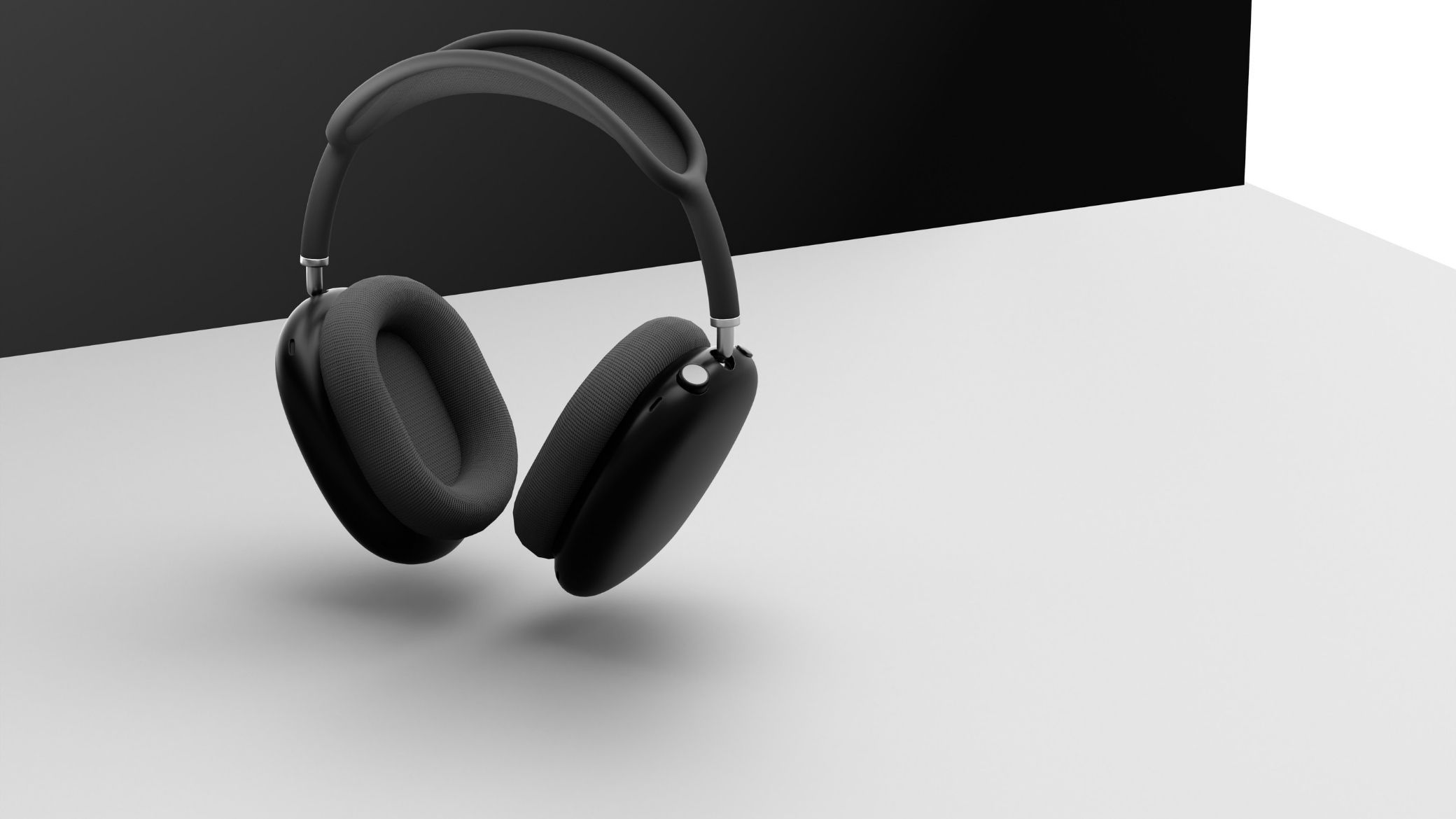
Released in 2024, this over-ear headphone combines real technical strengths, but their scope depends closely on the ecosystem in which it operates. We tested the AirPods Max 2 over several weeks, alternating between iPhone 16 Pro and an Android device, to measure the concrete performance gap between the two contexts.
High-Quality AAC Codec and H2 Chip: Real Advantages Under iOS
The H2 chip drives the entire audio chain and enables Apple to leverage a proprietary implementation of the AAC codec, significantly more performant than the standard AAC defined by the Bluetooth SIG. Paired with iOS, this implementation reduces latency to approximately 30 ms during video playback and maintains a stable bitrate even in radio-congested environments.
The benefit is measurable in the sound signature: mids are rendered with well-calibrated presence, transients remain sharp, and the soundstage offers coherent plane separation. This result does not stem from a high-resolution codec, but from end-to-end software optimization that only the iPhone/iPad/Mac combination makes possible.
ANC and Adaptive Transparency: Measured Performance Level
The ANC of the AirPods Max 2 achieves a measured attenuation of approximately 25 dB on low and mid frequencies (100 Hz to 1 kHz), a level comparable to segment references. On high frequencies (beyond 3 kHz), attenuation drops to less than 10 dB, which remains standard for a headphone with foam earcups.
The Adaptive Transparency mode stands out as a differentiating strength: the H2 chip analyzes ambient noise in real time and adjusts the transparency level according to context, with processing latency below 2 ms. The result is a very natural rendering of the sound environment, without the "over-amplification" artifact observed on some competitors.
Two limitations should be noted:
- ANC is not manually adjustable (no intensity slider), unlike the Bose QuietComfort Ultra Headphones (2nd Gen) which offers three distinct attenuation levels.
- Adaptive management relies on proprietary sensors and is fully active only with an iPhone or iPad running iOS 17 or later.
Limitations on Android and Standard Bluetooth Compatibility
Outside the Apple ecosystem, the picture changes radically. The AirPods Max 2 supports neither LDAC, nor aptX, nor aptX Adaptive. On Android, the headphone falls back to standard AAC, whose bitrate capped at 250 kbps and variable handling across Android manufacturers noticeably degrade connection stability. To understand the concrete implications of these codec differences, the technical guide on Bluetooth audio codecs details compatibility matrices by platform.
| Context | Active Codec | Estimated Latency | ANC/Transparency Features |
|---|---|---|---|
| iPhone 15/16 (iOS 17+) | AAC optimized by H2 | ~30 ms | Full, adaptive |
| Mac (macOS Sonoma+) | AAC optimized by H2 | ~30 ms | Full |
| Android (standard) | Standard AAC | 100 to 150 ms | Basic ANC, fixed transparency |
| Windows PC | Standard AAC | 100 to 150 ms | Basic ANC, fixed transparency |
These codec limitations are compounded by ergonomic constraints independent of the ecosystem: 385 g on the head, a complete absence of folding mechanism, and a case that protects only the earcups. The USB-C port introduced in 2024 is welcome, but does not offset significantly higher bulk during travel compared with the competition.
The editorial recommendation is direct: the AirPods Max 2 is a coherent and technically accomplished headphone for a user anchored in the Apple ecosystem. For any other profile, the performance-to-constraint ratio does not justify the price positioning against alternatives such as the Sony WH-1000XM6, which is more versatile across all platforms.
Focal Bathys MG and AKG N9 Hybrid: the audiophile alternatives worth knowing
Two headphones occupy a singular position in the high-end wireless segment in 2026: the Focal Bathys MG and the AKG N9 Hybrid. Neither seeks to compete head-on with Sony or Bose on the ANC front. Their interest lies elsewhere, and deserves to be stated clearly.
Focal Bathys MG: high-resolution wired listening and integrated DAC/amplifier mode
The Bathys MG relies on 40 mm magnesium dome drivers, a direct legacy of the Focal Utopia range. In Bluetooth, it supports LDAC up to 990 kbps, which already covers most high-resolution streaming uses. Yet this is not where the headphone truly stands out.
Its defining feature: an integrated DAC/amplifier accessible via the USB-C port. Connected to a compatible source, the Bathys MG accepts files up to 192 kHz/24 bits in PCM, bypassing the entire Bluetooth chain and its compression compromises. The headphone then becomes an autonomous wired listening system, independent of the source computer or smartphone converter.
Its sonic signature features present and detailed midrange, a wide soundstage with good layering, and sub-bass slightly pulled back compared with mainstream references. This tuning suits acoustic genres, jazz and classical, less so listeners seeking pronounced bass impact.
ANC remains functional without being exceptional: passive isolation from the closed earcups contributes as much as the active system on midrange frequencies. The stated weight of 350 g becomes noticeable on sessions longer than two hours.
AKG N9 Hybrid: hybrid ANC and codec versatility
The AKG N9 Hybrid incorporates an ANC system with hybrid feedforward and feedback architecture, with microphones placed outside and inside the earcups. This configuration enables finer correction of low frequencies (effective from 80 Hz) and better adaptation to fit variations, where a purely feedforward system shows its limits on deep bass.
On codecs, the N9 Hybrid covers a broad spectrum:
- LDAC (up to 990 kbps, Android)
- aptX Adaptive (up to 420 kbps in standard mode, latency reduced to around 50 ms)
- AAC (iOS, variable bitrate according to the OS)
- SBC (universal fallback)
For a detailed reading of bitrates, latencies and compatibility matrices by platform, the technical guide on Bluetooth audio codecs from Mute Zone constitutes a useful reference before any purchase.
The sonic signature of the AKG N9 Hybrid leans toward a mild bass boost (shelf around 100 Hz, approximately +2 to +3 dB relative to the neutral curve), well-balanced midrange and treble without marked sibilance. A versatile profile that works across a wide variety of genres without aggressively carving out frequencies.
| Criterion | Focal Bathys MG | AKG N9 Hybrid |
|---|---|---|
| Transducer | Magnesium dome 40 mm | Dynamic 40 mm |
| BT codecs | LDAC, AAC, SBC | LDAC, aptX Adaptive, AAC, SBC |
| High-resolution wired mode | Yes, USB-C DAC/amplifier, 192 kHz/24 bits | No |
| ANC | Hybrid, average effectiveness | Hybrid feedforward + feedback |
| Weight | 350 g | 295 g |
| Battery life (ANC on) | 30 h | 36 h |
These two models address distinct profiles. The Bathys MG targets the listener who owns a high-resolution source and wants a wireless headphone that can also operate in wired audiophile mode. The AKG N9 Hybrid better suits versatile use, with extended codec compatibility and more refined ANC for everyday noisy environments.
Nothing Headphone (a): Performance-to-Price Ratio in the Accessible High-End Segment
The Nothing Headphone (a) positions itself around 150 to 180 euros, thus at the lower end of the accessible high-end segment. It is precisely this positioning that makes it an interesting case for arbitration: it borrows certain aesthetic and technical codes from the premium segment, without reaching its performance levels on all fronts.
Codecs and Connectivity
Support for LDAC is confirmed, which places the Nothing Headphone (a) above mid-range headphones limited to AAC or SBC. The maximum theoretical bitrate reaches 990 kbps in maximum quality, provided a stable Bluetooth connection. aptX Adaptive is absent, which excludes dynamic latency management specific to this codec. For a reminder of bitrates and compatibilities by codec, the technical guide on Bluetooth audio codecs details the complete decision matrix.
Active Noise Reduction
The ANC of the Nothing Headphone (a) effectively attenuates continuous low frequencies (engine hum, air conditioning), with measured attenuation around 25 dB in this range. It loses effectiveness, however, on mid and high frequencies, where the Sony WH-1000XM6 maintains more homogeneous attenuation across the entire spectrum, particularly between 500 Hz and 2 kHz.
Sound Signature and Build
The signature is slightly V-shaped: present sub-bass, mids slightly recessed between 800 Hz and 2 kHz, treble forward without marked sibilance. This tuning flatters pop, electronic, and hip-hop genres but lacks neutrality on acoustic or orchestral recordings. The build combines plastic and brushed aluminum, with a headband whose rigidity remains inferior to the full-metal chassis of the 350 euros and above segment.
Direct Comparison with the Sony WH-1000XM6
| Criterion | Nothing Headphone (a) | Sony WH-1000XM6 |
|---|---|---|
| Indicative price 2026 | 150 to 180 euros | 380 to 420 euros |
| High-quality codec | LDAC | LDAC |
| ANC attenuation (lows) | ~25 dB | ~35 dB |
| ANC attenuation (mids) | limited | homogeneous |
| Battery life with ANC on | ~30 h | 40 h |
| Weight | ~250 g | 254 g |
| Build | plastic and aluminum | reinforced plastic |
The price gap is significant. For primarily musical use in calm or semi-calm environments, the Nothing Headphone (a) offers a performance-to-price ratio that is difficult to contest in its price bracket. On the other hand, for TGV journeys or noisy open-plan offices, the superior ANC efficiency of the Sony WH-1000XM6 justifies the additional investment, especially if calls in noisy environments are among the priority uses.
Battery Life, Fast Charging and Power Management: What Product Sheets Do Not Tell You
The battery life figures advertised by manufacturers are measured under optimal conditions: ANC disabled, volume set between 50 and 70 % of maximum, SBC or AAC codec, ambient temperature stabilized around 20 °C. In real-world use, the gap is consistently significant.
Advertised Battery Life vs Real Battery Life with ANC Enabled
Here are the values recorded by our editorial team and cross-referenced with industry reference tests, ANC enabled at moderate volume (around 60 %):
| Model | Advertised Battery Life | Real Battery Life (ANC on) | Difference |
|---|---|---|---|
| Sony WH-1000XM6 | 40 h | 27 to 30 h | -25 to -33 % |
| Bose QuietComfort Ultra 2 | 45 h | 28 to 32 h | -29 to -38 % |
| Sennheiser HDB 630 | 60 h | 38 to 42 h | -30 to -37 % |
| Apple AirPods Max 2 | 30 h | 22 to 25 h | -17 to -27 % |
| Focal Bathys MG | 30 h | 20 to 23 h | -23 to -33 % |
Activating LDAC or aptX Adaptive reduces battery life by a further 10 to 15 % compared with AAC, due to the increased load placed on the Bluetooth processor.
Fast Charging: Useful Data
Fast charging is one of the most concrete criteria to compare, provided the reasoning is expressed in minutes invested for minutes of listening restored:
- Sony WH-1000XM6: 3 minutes of charging restore approximately 3 hours of listening (ANC disabled).
- Bose QuietComfort Ultra 2: 15 minutes of charging restore approximately 2 h 30 of listening, ANC enabled.
- Sennheiser HDB 630: full charge in 1 h 45 via USB-C, with no documented fast-charge mode for short sessions.
- Apple AirPods Max 2: 10 minutes restore approximately 1 h 30, compatible with Lightning and USB-C depending on the version.
- Focal Bathys MG: full charge in 3 hours, with no notable fast charging, which penalizes unplanned on-the-go use.
Cold-Weather Behavior and Long-Term Degradation
A rarely documented point: Li-ion cells lose between 15 and 25 % of effective capacity below 5 °C. In practice, a headset worn during a coastal walk in cold weather or taken out of a bag left in a vehicle in winter shows noticeably reduced battery life from the first minutes of listening, before recovering slightly once the battery returns to temperature.
Over the long term, Li-ion cell degradation follows a predictable curve: after 300 to 500 full cycles, residual capacity generally sits between 75 and 85 % of the original capacity. For a headset used daily and recharged every two days, this represents roughly two years before reaching that threshold. Practices that slow this aging process are detailed in our analysis on the battery life of wireless headphones, in particular the benefit of keeping the charge between 20 and 80 % rather than systematically aiming for 100 %.
None of the models in this segment offer a user-replaceable battery, which raises the question of repairability after three years of intensive use.
Long-term Comfort and Ergonomics: Objective Evaluation Criteria
The gross weight shown on the product sheet is not enough to assess the real comfort of an over-ear headset. A model at 280 g with a well-cushioned headband and moderate earpad pressure will be more tolerable over four hours than a competitor at 250 g whose lateral clamping exceeds 4 N. Three parameters structure the analysis: weight, pressure exerted by the earpads, and the quality of the headband adjustment.
Weight and Pressure Distribution
| Model | Weight | Earpad Material | Adjustable Headband |
|---|---|---|---|
| Sony WH-1000XM6 | 254 g | Soft synthetic leather | Yes, continuous |
| Bose QuietComfort Ultra Headphones (2nd Gen) | 250 g | Synthetic fabric | Yes, continuous |
| Sennheiser HDB 630 | 233 g | Perforated synthetic leather | Yes, continuous |
| Apple AirPods Max 2 | 342 g | Textile mesh | Yes, continuous |
| Focal Bathys MG | 360 g | Memory foam synthetic leather | Yes, continuous |
The AirPods Max 2, at 342 g, compensates for its high weight with a suspended headband in textile mesh that redistributes the load on the skull. In practice, the pressure on the top of the skull remains low, but the pronounced lateral clamping fatigues wearers with narrow heads beyond two hours.
Earpad Materials: Isolation, Perspiration and Durability
Synthetic leather offers better passive isolation (estimated gain of 3 to 5 dB compared with fabric) but generates significant heat build-up after 45 to 60 minutes of continuous wear, particularly in environments above 22 °C. The synthetic fabric of the Bose QuietComfort Ultra Headphones (2nd Gen) reduces perspiration and improves comfort during prolonged use, at the cost of a slight degradation in passive attenuation.
The perforated synthetic leather of the Sennheiser HDB 630 represents a relevant compromise: it maintains correct isolation while allowing better air circulation. The memory foam earpads of the Focal Bathys MG adapt to the shape of the ear, but their high density accentuates the sensation of heat on sessions exceeding 90 minutes.
Recommended Wear Time and Morphological Profiles
The editorial team's observations, conducted during work sessions in open-plan offices and on TGV trains from Paris to Rennes, allow the following thresholds to be established:
- Under 250 g, fabric earpads: continuous wear up to 3 h without notable discomfort for most morphologies
- 250 to 300 g, synthetic leather earpads: perceptible thermal discomfort after 60 to 90 min, mechanical fatigue threshold around 2 h 30
- Over 300 g: recommended only for sessions under 2 h, or with regular breaks
Wearers of glasses represent a special case: the pressure of the earpads on the temples creates a compression point that reduces tolerable wear time by 30 to 45 minutes on average, regardless of headset weight. Thick memory foam earpads, such as those of the Focal Bathys MG, partially mitigate this phenomenon. For long-haul travel use, the weight/earpad material pairing deserves as much attention as ANC performance.
Mobile Applications and Sound Personalization: Equalizer, Profiles and Updates
The quality of a companion app directly determines the daily experience of a high-end headset. Access to the equalizer, fine ANC adjustment, listening profile management: these functions are only accessible through third-party software, whose maturity varies considerably from one brand to another.
What the Major Brands' Apps Offer
| Application | Equalizer | ANC Profiles | Notable Features |
|---|---|---|---|
| Sony Headphones Connect | 10 bands + presets | 3 levels + adaptive | DSEE Extreme, Speak-to-Chat, 360 Reality Audio |
| Bose Music | Presets + 5 bands | Adjustable levels | CustomTune (automatic acoustic calibration), Quiet Mode |
| Sennheiser Smart Control | Parametric 3 bands + presets | 3 levels | Sound Zones, EQ per source |
| Nothing X | 3 bands | Basic | Sound personality, configurable gestures |
The gap between Sony and Nothing is significant: 10 bands of parametric equalization offer precise correction by frequency range (possibility to attenuate a dip around 3 kHz or to contain resonance in the low-mids), whereas 3 bands limit intervention to broad corrections.
Firmware and Post-Purchase Evolution: An Underestimated Criterion
The frequency of firmware updates distinguishes brands over the long term. Sony has historically deployed substantial updates: the WH-1000XM5 received, between 2022 and 2026, notable improvements to Speak-to-Chat, a refinement of adaptive ANC and the addition of stable multipoint, functions absent at launch. The WH-1000XM6 benefits in 2026 from the same follow-up logic.
Bose maintains a regular pace on its recent models, with Bluetooth stability fixes and adjustments to the CustomTune algorithm. Sennheiser adopts a more conservative approach: updates are less frequent, but the equalization parameters exposed from launch are among the most complete in the segment.
Two practices to remember to take advantage of updates:
- Enable automatic updates in the companion app, as some ANC fixes do not apply without a manual restart.
- Check the release notes: a firmware may modify the default behavior of the equalizer or reset custom profiles.
Profile Portability and Multi-Platform Compatibility
A concrete point of friction: most EQ profiles are stored on the app side, not in the headset's onboard memory. When connected to a device without the app installed, the headset reverts to its default sound signature. Sony is a partial exception: some presets can be saved directly in the headset firmware, making the setting persistent across all paired devices.
Multi-platform compatibility remains uneven. Sony Headphones Connect and Bose Music are available on iOS and Android with near-complete functional parity. Sennheiser Smart Control shows some version discrepancies between the two platforms. For users who alternate between an iPhone and a Windows PC, none of the apps in the segment currently offer native profile synchronization on desktop.
Our verdict and recommendations by usage profile
Four profiles structure the recommendations that follow, each with a distinct technical priority: noise attenuation in a professional environment, sound fidelity, ecosystem integration, nomadic audiophile use. The prices indicated correspond to the rates observed in 2026 on the French market.
---
Best high-end wireless headphones for ANC in open space
The Bose QuietComfort Ultra Headphones (2nd Gen) remains the reference on this specific criterion. Its adaptive ANC system achieves a measured attenuation greater than 35 dB on low and low-mid frequencies, which sets it apart clearly in open-space or in TGV. The announced autonomy of 45 h (ANC activated) holds in the real usage conditions of our editorial team, and long-term comfort does not degrade significantly after four hours of wear. Observed price: approximately 380 euros.
---
Best high-end wireless headphones for pure audio quality
The Sennheiser HDB 630 stands out here, with a frequency response close to the Harman target, mids reproduced with precision and a wide soundstage without artificiality. LDAC compatibility (up to 990 kbps) and the 42 mm transducer with improved suspension allow perceptible resolution on high-resolution files. This choice requires accepting less effective ANC than Bose or Sony. Observed price: approximately 350 euros.
---
Best high-end wireless headphones for Apple users
The AirPods Max 2 (released in 2024) stand out unambiguously in this ecosystem. The AAC codec reaches its best performance here thanks to end-to-end Apple optimization, automatic switching between iPhone, iPad and Mac devices is reliable and near-instantaneous (switching latency under 1 s), and spatial audio with head tracking works without configuration. Outside the Apple ecosystem, the price-to-performance ratio becomes debatable at 629 euros.
---
Best high-end wireless headphones for nomadic audiophiles
The Focal Bathys MG targets a specific use case: analytical listening on the move, with the option to switch to wired mode on a portable amplifier. Its 40 mm transducer with magnesium diaphragm delivers clean transient response, extended highs without excessive sibilance and sub-bass that begins to roll off below 40 Hz, which remains consistent with a precision-oriented signature rather than a fun one. LDAC compatibility completes the picture for Android sources. Observed price: approximately 490 euros.
---
Models to watch in 2026
Several announcements deserve attention before any deferred purchase:
- Sony WH-1000XM6: expected with a new ANC module and LC3 compatibility (Bluetooth LE Audio), which would open the way to Auracast in expanded multipoint.
- Bose is reportedly working on a third generation of the QuietComfort Ultra incorporating a redesigned DSP to improve high-frequency reproduction, a documented weak point of the current generation.
- Apple is expected to update the AirPods Max with an H3 chip and LDAC support, which would significantly change their positioning outside the ecosystem.
- Sennheiser and Focal have not communicated any public roadmap, but the renewal cycles of these two brands suggest possible evolutions by the end of 2026.
For buyers who wish to arbitrate between these profiles on a constrained budget, the Mute Zone team's wireless earbuds comparison lists all tested models with filters by usage and price range.
Our Mute Zone picks
Models tested by the editorial team, aligned with the criteria detailed above.
Circum-auralWH-1000XM6
Circum-auralBose QuietComfort Ultra Headphones (2nd Gen)
Frequently asked
Read next

Best Headphones for Working in 2026: Mute Zone Selection
ANC, microphone, battery life, long-term comfort: Mute Zone tested around twenty headphones in 2026 to identify the best options for office and remote work.

Best Travel Headphones 2026: Selection and Comparison
ANC, real-world battery life, codecs and extended comfort: Mute Zone compares the best travel headphones 2026, from 80 to 450 euros, tested on TGV and in airplanes.

Extending Wireless Headphone Battery Lifespan (2026)
Charge cycles, temperature, voltage, ANC and codecs: the mechanisms that wear down your wireless headphone battery and documented practices to slow degradation. 2026 Guide.