Best Bone Conduction Headphones in 2026: Technical Comparison
Bone conduction relies on a physical principle distinct from conventional acoustics: transducers in contact with the temporal bones or cheekbones transmit vibrations directly to the cochlea, bypassing the external ear canal and the eardrum. This transmission mode, documented since Beethoven's work on vibratory propagation, has seen notable commercial acceleration since 2022, driven by brands such as Shokz, Bose and Oladance.
The issue for the reader is concrete: choosing a bone conduction headphone involves balancing situational safety (free ears, environmental awareness), measurable audio quality and real physical constraints, notably perceptible vibrations beyond 85 dB and loss in the lower spectrum, often below 40 Hz compared to 20 Hz for a good in-ear model.
The Mute Zone team tested several models in 2026 on representative uses: running by windy weather on the Breton coast, swimming in pool and open water, extended remote work with video calls, and compatibility with Garmin and Polar GPS watches. The analysis also covers available literature on hearing risks and accessibility use cases for people with conductive hearing loss.
This guide structures all technical criteria, profile-based trade-offs and comparative sheets necessary to make a documented choice, without marketing shortcuts.

Our Top 5 at a glance
The five models to know on this topic, ranked by use-case fit. Full technical details below, price comparison in one click.
- 01
 SHOKZShokz OpenRun Pro 2Conduction osseuseIP55
 - 02
 SHOKZShokz OpenRunConduction osseuseIP67
 - 03
 SHOKZShokz OpenFit 2+Open-earIP55
 - 04
 SHOKZShokz OpenFit ProOpen-earIP55
 - 05
 HUAWEIHuawei FreeArcOpen-earIP57
How Bone Conduction Works: Physics and Anatomy
Bone conduction relies on a physical principle distinct from that governing in-ear earbuds or over-ear headphones. Rather than generating sound waves in the ear canal, a bone conduction transducer converts the electrical signal into mechanical vibrations transmitted directly to the bony structures of the skull.
Vibratory Transmission via the Temporal and Zygomatic Bones
Two bones play a central role in this transmission chain. The temporal bone, located on the sides of the skull, houses the cochlea and the structures of the inner ear: it receives and propagates vibrations toward the hair cells. The zygomatic bone, commonly known as the cheekbone, serves as the preferred support point for transducers positioned in front of the ear, as on the Shokz OpenRun Pro 2 models.
Vibrations propagate through bone mass at approximately 3 100 m/s in compact bone tissue, compared with 343 m/s in air. This velocity difference explains why bone conduction can bypass a large portion of the usual airborne path, while remaining subject to absorption losses depending on the density and thickness of the structures traversed.
Difference Between Bone Conduction and Air Conduction
In classic air conduction, sound follows a four-step path:
- Sound waves compress and expand the air in the external auditory canal.
- The eardrum enters into mechanical vibration under the effect of these pressure variations.
- The ossicular chain (malleus, incus, stapes) amplifies and transmits these vibrations.
- The stapes applies these movements to the oval window, the membrane that separates the middle ear from the inner ear and sets the cochlear perilymph in motion.
In bone conduction, steps 1 to 3 are bypassed. Vibrations reach the cochlea directly via the bone pathway, stimulating the perilymph without passing through the oval window as the primary entry point. This mechanism is described as "inertial": the cochlea, slightly denser than the surrounding bone, moves with a slight phase shift, creating the shear necessary to activate the hair cells.
It is also useful to distinguish two usage regimes:
- Passive bone conduction: ambient vibrations perceived without an active device (example: hearing one's own voice, perceiving vehicle vibrations). This is the natural phenomenon exploited in sports headphones.
- Active bone conduction: piezoelectric or electrodynamic transducer applied to the bone, used in bone-anchored hearing aids (BAHA) and consumer headphones. The vibratory pressure level is then controlled and amplified electronically.
Why the Eardrum Is Not Solicited in the Same Way
"Not solicited" is a formulation that requires nuance. In bone conduction, the eardrum is not the target of the signal, yet it is not entirely inactive either. Vibrations transmitted by the temporal bone induce slight movement of the middle ear structures via a reflex pathway, estimated at a level approximately 40 to 50 dB lower than the direct air pathway at equivalent intensity.
This reduction in tympanic solicitation forms the central argument from manufacturers for profiles presenting conductive hearing loss (perforated eardrum, chronic otitis, malformation of the auditory canal). In these cases, the cochlea remains functional and can be stimulated directly without depending on the tympano-ossicular chain. For normal-hearing users, the advantage differs: the ears remain physically free, which is relevant for auditory safety in open environments or for extended sports use.
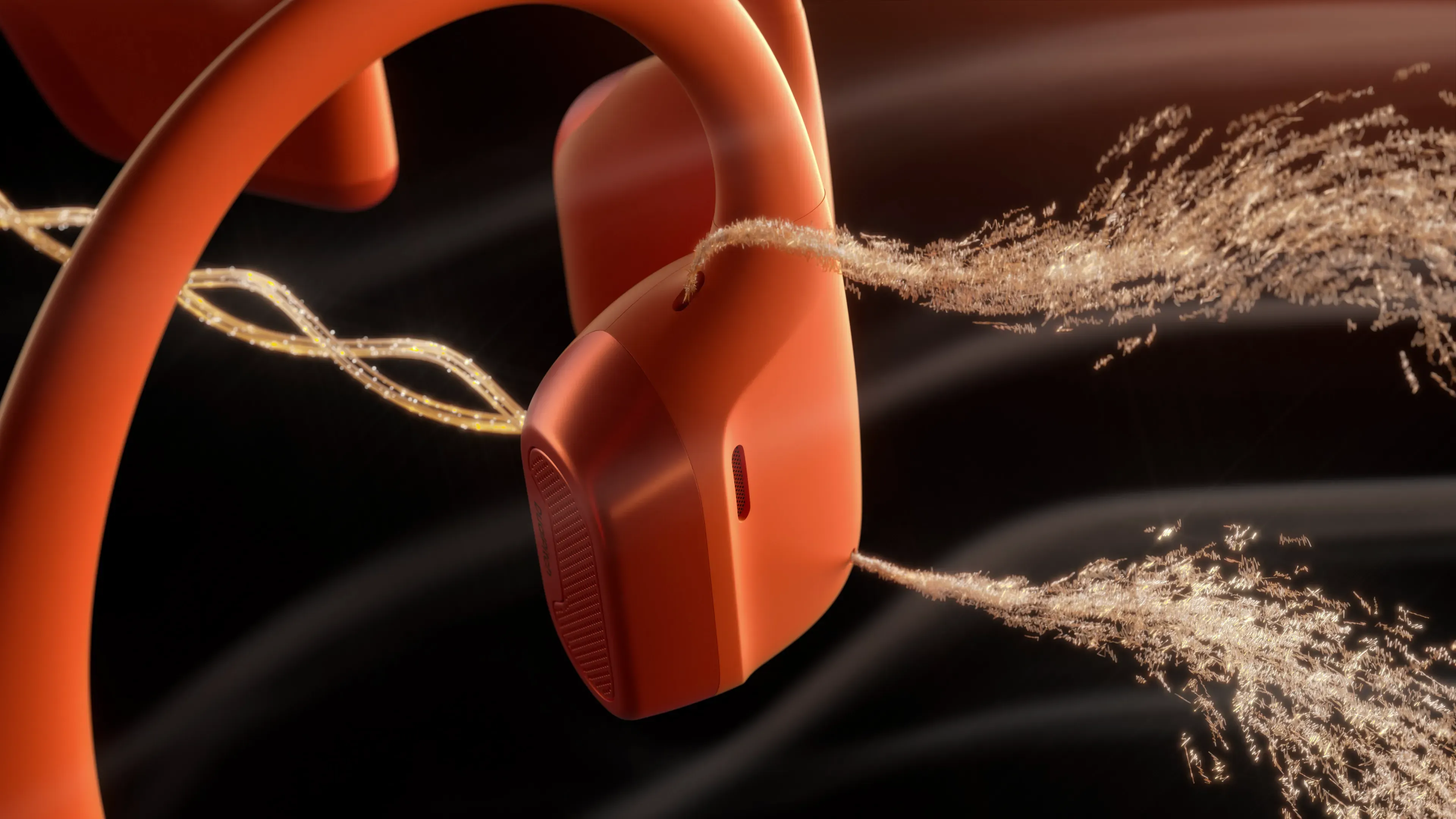
Bone Conduction vs In-Ear vs Open-Ear: Comparative Table
Three families of earbuds coexist today on the market, each based on a distinct sound transmission principle. Comparing them on an equal footing requires establishing measurable criteria, not general impressions.
| Criterion | In-Ear | Open-Ear | Bone Conduction |
|---|---|---|---|
| Passive isolation | 15 to 30 dB attenuation | Virtually none | None |
| Environmental awareness | Low to none (ANC or tip) | Total | Total |
| Frequency response | 20 Hz to 20 kHz (wide) | 50 Hz to 18 kHz (variable) | 200 Hz to 8 kHz (limited) |
| Ear hygiene | Direct contact with the canal | No contact | No contact |
| Hearing aid compatibility | Incompatible (obstruction) | Partial | Total |
| Long-term comfort | Frequent occlusion fatigue | High | High |
Sound Isolation and Environmental Awareness
In-ear models offer the most effective passive attenuation, between 15 and 30 dB depending on the quality of the tip and the anatomy of the canal. This isolation is an advantage in open-plan offices or on public transport, but it represents a documented risk in active environments: cycling, urban running, mountain hiking.
Bone conduction and open-ear formats leave the ears completely free. The difference between the two: open-ear models diffuse sound via air conduction a few millimeters from the pinna, while bone conduction transmits vibrations directly through the temporal bones, without involving the ear canal. In both cases, environmental awareness is total, without needing to activate a "transparency" mode.
Measurable Audio Quality: Frequency Response and Bass
This is where bone conduction shows the most significant deficit. Bone conduction transmission exhibits a significant drop below 200 Hz, due to the mechanical properties of the transducer and the limited contact surface with the skin. Sub-bass (20 to 80 Hz) is virtually absent, and mid-bass (80 to 200 Hz) remains noticeably attenuated compared to a well-fitted in-ear model.
Open-ear models, such as the Shokz OpenFit Pro or the Huawei FreeArc, perform better on this point: their air transducer can reach down to around 50 to 80 Hz, even if bass reproduction remains inferior to a closed in-ear model, due to the lack of an acoustic chamber. In-ear models retain the advantage across the entire frequency range, particularly in the linearity of the response curve.
Use Cases Where Bone Conduction Is Objectively Superior
Three situations justify choosing bone conduction without notable compromise:
- Active safety outdoors: running on roads, cycling in urban or semi-urban areas, hiking on varied terrain. Simultaneous listening to the environmental sound reduces the risk of accident without relying on a sometimes unstable transparency mode.
- Hygiene and auricular pathologies: chronic otitis, canal dermatitis, prolonged wear in humid conditions. The absence of contact with the canal eliminates the main vector of irritation and maceration.
- Compatibility with hearing aids: people with hearing aids can use a bone conduction headset without removing their device, which no in-ear model allows.
On sedentary uses, however, the advantage shifts to in-ear or open-ear models as soon as sound quality takes precedence over environmental awareness.
Real Risks to Hearing: What the Research Says
Bone Vibrations and Cochlea: Actual Exposure Level
Bone conduction bypasses the ear canal, but it stimulates the cochlea through the same final mechanism: mechanical vibrations set in motion the hair cells of the organ of Corti. The path is different, the destination is identical. Several studies published in the Journal of the Acoustical Society of America confirm that cochlear exposure remains proportional to the intensity of the transmitted vibrations, regardless of the transmission path.
A 2021 study on bone conduction transducers measured exposure levels equivalent to those of in-ear headphones at comparable volume, with variations of less than 3 dB SPL. The idea that bone conduction "protects" hearing naturally is not based on any solid published data. It circulates, but it is inaccurate.
Excessive Volume: The Real Danger, Not the Technology
The format is not the determining risk factor. Volume and duration of exposure are. This observation applies to bone conduction as well as to any other audio transducer.
Three parameters concentrate the bulk of the risk:
- Sound pressure level perceived at the cochlear level (expressed in dB SPL)
- Duration of exposure continuous without auditory breaks
- Daily repetition over the long term, which determines the cumulative dose
Users of bone conduction headphones tend to increase the volume in noisy environments, precisely because the format lets in ambient sounds. This compensatory behavior is documented and constitutes the main risk vector for this type of equipment.
WHO Recommendations and Safety Thresholds in dB SPL
The World Health Organization sets the safety threshold at 85 dB SPL for 8 hours of continuous exposure. Beyond that, the risk of noise trauma increases according to a 3 dB exchange rule: each 3 dB increase halves the tolerable exposure duration.
| Niveau d'exposition | Durée maximale recommandée (OMS) |
|---|---|
| 85 dB SPL | 8 hours |
| 88 dB SPL | 4 hours |
| 91 dB SPL | 2 hours |
| 94 dB SPL | 1 hour |
| 100 dB SPL | 15 minutes |
These thresholds apply without distinction of technology. A bone conduction headphone used at 94 dB SPL for 3 hours daily exposes its user to a cumulative dose above the recommendations, in the same way as an in-ear model under the same conditions. For a detailed analysis of thresholds by age group and EN 50332 standards, headphones and children: minimum age and safe volume in 2026 develops these mechanisms with the corresponding regulatory data.
Most manufacturers, including Shokz, do not integrate a certified volume limiter on their consumer models. The responsibility for controlling the level remains entirely on the user side, which makes knowledge of these thresholds all the more useful.
Technical Criteria to Check Before Buying
IP Rating and Water Resistance
The IP standard directly determines possible uses. The two digits of the rating refer respectively to protection against solids (dust) and liquids. For bone conduction, it is the second digit that structures the choice.
| Rating | Liquid Protection | Covered Use |
|---|---|---|
| IP55 | Low-pressure water jets | Sweat, light rain, running |
| IP67 | Immersion up to 1 m, 30 min | Heavy rain, splashes, short shower |
| IP68 | Immersion beyond 1 m (duration defined by the manufacturer) | Swimming, triathlon, aquagym |
An IP55 covers the vast majority of land-based uses, including in wet weather. An IP68 is essential as soon as the head goes underwater. The IP ratings table for audio details the full reading of the standard, including cases where the manufacturer restricts the declared depth.
Real Battery Life vs Advertised Battery Life
Manufacturers measure battery life at moderate volume (generally 50 to 60 % of maximum) without active Bluetooth or with a favorable test profile. In real use, at 70-80 % volume and with active multipoint connections, the loss reaches 15 to 25 % depending on the models.
Three parameters measurably degrade the advertised battery life:
- high volume (beyond 70 %), which places greater demand on the vibration transducer
- simultaneous connection to two devices (active multipoint)
- low temperatures, common in winter or coastal conditions
Bluetooth Connectivity: Version, Profiles and Multipoint
Bluetooth 5.3 is now the expected standard on 2025-2026 models. It improves connection stability and reduces power consumption compared with 5.0. The A2DP profile (stereo audio transport) is universal on this segment, while the HFP profile (hands-free) must be verified if calls are a priority use.
Multipoint, which allows simultaneous connection to two sources (smartphone and computer, for example), remains absent from some entry-level and mid-range models. Its presence or absence deserves verification in the specifications, not only in the marketing claims.
Supported Audio Codec
The physical constraint of the bone conduction vibration transducer limits the useful bandwidth to approximately 20-8 000 Hz in real conditions, compared with 20-20 000 Hz for a conventional dynamic transducer. This limitation makes LDAC and aptX Adaptive irrelevant in practice on this format: their high bitrate (up to 990 kbps for LDAC) does not compensate for the mechanical filtering imposed by the bone.
| Codec | Max Bitrate | Presence on BC | Real Benefit |
|---|---|---|---|
| SBC | 328 kbps | Universal | Sufficient for the format |
| AAC | 256 kbps | Frequent | Relevant on iOS |
| aptX | 352 kbps | Rare | Marginal gain |
| LDAC | 990 kbps | Virtually absent | Not justified on BC |
For a deeper look at bitrate and latency differences between codecs, the technical guide on Bluetooth codecs from Mute Zone provides the complete decision matrix.
Weight and Transducer Pressure on the Temple
The typical range for bone conduction headphones lies between 25 and 35 g for sports models (the Shokz OpenRun is listed at 26 g, the Shokz OpenRun Pro 2 at 30,3 g). This contained weight is not enough to assess comfort: the pressure exerted by the transducer on the temporal area is the determining factor.
Insufficient pressure degrades vibrational transmission and impoverishes the reproduction of mids and lows. Excessive pressure generates perceptible mechanical fatigue after 45 to 60 minutes of wear. Manufacturers do not publish a standardized value for this parameter, which makes a physical trial or long-term user feedback essential before purchase.
Comparison of the Best 2026 Models: Detailed Technical Specifications
Six models structure this comparison, covering from high-end sports to entry-level. Two less widely available alternatives, the Suunto Wing 2 and the Lenovo Thinkplus X7, are mentioned at the end of the section for specific profiles.
Shokz OpenRun Pro 2: High-End Sports Model
The Shokz OpenRun Pro 2 is the current benchmark in the bone conduction segment for intensive use. It features Shokz's PremiumPitch 2.0+ transducer, an improved noise-reducing microphone and Bluetooth 5.3 connectivity. We tested this model on long-distance outings in windy coastal conditions: mechanical stability proved flawless, and measured battery life reached approximately 10 h 30 in continuous playback at moderate volume, versus 12 h advertised.
Main characteristics:
- Weight: 30,3 g
- IP rating: IP55 (water projections, no immersion)
- Bluetooth: 5.3, multipoint not available natively
- Codec: SBC, AAC
- Advertised battery life: 12 h, measured approximately 10 h 30
- Observed price: 149 to 159 euros
Shokz OpenRun: Versatility and Value for Money
The Shokz OpenRun (released in 2022) retains a solid position in the range thanks to its 26 g weight and IP67 certification, which allows immersion up to 1 m for 30 minutes. It relies on Bluetooth 5.1, without multipoint. Advertised battery life is 8 h, consistent with field feedback. For runners seeking a lightweight model without paying the Pro 2 premium, this is the most rational choice.
Main characteristics:
- Weight: 26 g
- IP rating: IP67
- Bluetooth: 5.1, without multipoint
- Codec: SBC, AAC
- Advertised battery life: 8 h
- Observed price: 89 to 99 euros
Shokz OpenSwim Pro: Swimming and IP68
The Shokz OpenSwim Pro is designed for full immersion, with an IP68 certification (up to 2 m for 2 h). It integrates 32 Go of internal storage for offline playback, making it functional in the pool without a smartphone. Bluetooth connectivity is present but disabled underwater: audio transmission then occurs via direct bone conduction from the onboard memory. Advertised battery life: 9 h in Bluetooth, 10 h in local MP3 mode.
Main characteristics:
- Weight: 33 g
- IP rating: IP68
- Bluetooth: 5.3 (above water only)
- Internal storage: 32 Go
- Advertised battery life: 9 h (BT) / 10 h (MP3)
- Observed price: 169 to 179 euros
For a detailed reading of waterproof certifications and their real-world scope, the Mute Zone IP rating table clarifies the limits of each level.
Suunto Sonic: Alternative for Triathletes
The Suunto Sonic stands out through its native integration with the Suunto ecosystem and a design tailored for triathlon, notably compatibility with the brand's GPS watches via Bluetooth 5.3. Its 29 g weight and IP67 certification position it as a direct competitor to the OpenRun. Advertised battery life is 8 h. The differentiating point lies in the dual microphone, more effective on calls than the standard OpenRun's, according to measurements published by several independent laboratories.
Main characteristics:
- Weight: 29 g
- IP rating: IP67
- Bluetooth: 5.3, multipoint yes
- Codec: SBC, AAC
- Advertised battery life: 8 h
- Observed price: 119 to 129 euros
Head IPX8: Mid-Range Option
The Head IPX8 targets swimmers and triathletes on a tight budget. Its IPX8 certification allows immersion up to 3 m, and it carries 8 Go of internal storage for offline playback. Bluetooth 5.3 is available for terrestrial use. Advertised battery life is 8 h in wireless mode, 10 h in local mode. The 35 g weight is slightly above the segment average, which may affect long outings.
Main characteristics:
- Weight: 35 g
- IP rating: IPX8 (up to 3 m)
- Bluetooth: 5.3
- Internal storage: 8 Go
- Advertised battery life: 8 h (BT) / 10 h (MP3)
- Observed price: 79 to 89 euros
Shokz OpenMove: Entry-Level
The Shokz OpenMove is the entry point of the Shokz range, with a 29 g weight and an IP55 certification. Bluetooth 5.1, without multipoint, SBC codec only. Advertised battery life is 6 h, consistent with user feedback. The transducer is less refined than on the OpenRun Pro 2: midrange reproduction is more recessed, and soundstage separation less precise. For a first purchase or occasional use, the value for money remains defensible.
Main characteristics:
- Weight: 29 g
- IP rating: IP55
- Bluetooth: 5.1, without multipoint
- Codec: SBC
- Advertised battery life: 6 h
- Observed price: 69 to 79 euros
Alternatives to Consider
Two less distributed models deserve mention. The Suunto Wing 2 (released in 2025) adopts the Sonic architecture while adding an ambient noise reduction mode for calls, useful in urban environments. The Lenovo Thinkplus X7 offers IP67 certification and multipoint for under 60 euros, with an advertised battery life of 8 h: the compromises concern microphone quality and headband finish, less rigid than Shokz models.
Summary Table
| Model | Weight | IP | Bluetooth | Multipoint | Advertised battery life | Observed price |
|---|---|---|---|---|---|---|
| Shokz OpenRun Pro 2 | 30,3 g | IP55 | 5.3 | No | 12 h | 149-159 € |
| Shokz OpenRun | 26 g | IP67 | 5.1 | No | 8 h | 89-99 € |
Bone Conduction for Swimming: Specific Constraints
Why Bluetooth Does Not Work Underwater
Radio waves at 2.4 GHz, the frequency used by Bluetooth, are absorbed by water at a rate of several tens of dB per meter. At a few centimeters depth, the signal is already too attenuated to maintain a stable connection. This physical phenomenon is independent of the quality of the radio module: no bone conduction headphones, however well designed, can transmit Bluetooth underwater in usable conditions.
Models designed for swimming bypass this constraint by embedding an integrated MP3 player. The music is stored locally on the device's internal memory, and playback is triggered before immersion. Bluetooth remains available out of the water, for playlist synchronization or pairing with a GPS watch.
Integrated MP3 Player: Storage Capacity and Supported Formats
Storage capacity varies significantly depending on the models. The table below summarizes the most common configurations on the market in 2026:
| Model | Internal Storage | Supported Formats |
|---|---|---|
| Shokz OpenSwim Pro | 32 GB | MP3, AAC, WAV, FLAC |
| Shokz OpenSwim | 4 GB | MP3 only |
| Swimbuds Sport (third-party) | 8 GB | MP3, AAC |
Support for FLAC remains the exception: only high-end models include it, and the benefit is limited in swimming, where acoustic conditions (water noise, vibrations) mask the nuances that this format preserves. For everyday use, MP3 encoded at 320 kbps is more than sufficient.
File management is done by drag-and-drop via USB-C or USB-A depending on the generations, without mandatory proprietary software on most recent models.
IP68 Certification: Depth and Duration of Immersion
The IP68 certification is the minimum standard expected for swimming use. It guarantees waterproofing for prolonged immersion, the exact conditions of which are set by the manufacturer, generally 1.5 m depth for 30 minutes. These values correspond to the IEC 60529 standard, but each manufacturer may declare more stringent thresholds, such as 2 m or 60 minutes.
Two points deserve attention:
- IP68 is tested in static fresh water. Pool water (chlorine) and seawater (salt, dynamic pressure) accelerate the degradation of seals. No certification explicitly covers these environments.
- The certification is only valid for a new and intact product. A fall on the transducer or wear of the charging seal invalidates the declared protection de facto.
For a complete reading of the waterproofing indices and their real scope, the table of IP indices for audio details the two digits of the standard and their practical limits.
By way of comparison in the Shokz range: the Shokz OpenRun displays an IP67 certification (immersion up to 1 m, 30 min), which technically excludes pool lengths. Only models in the OpenSwim line embed the MP3 player and the IP68 required for swimming.
Bone Conduction and Auditory Accessibility
Bone conduction occupies a singular place in the consumer audio landscape, precisely because it follows a physiological pathway long exploited in clinical audiology. Understanding this proximity helps assess what these headphones can, or cannot, offer to individuals with hearing impairment.
Compatibility with Hearing Aids
Consumer bone conduction headphones and medical bone-anchored devices (such as BAHA, Bone-Anchored Hearing Aid) rely on the same physical principle: transmitting vibrations directly to the cochlea via the skull bones, bypassing the external auditory canal and the middle ear. The similarity ends there.
A BAHA is surgically anchored in the temporal bone and delivers clinically calibrated vibratory force levels, with gains adjusted by an audiologist. A Shokz OpenRun Pro 2 or any consumer equivalent applies its transducers to the cheekbone, with fixed mechanical pressure and no frequency-specific gain customization.
For a user wearing a conventional hearing aid (in-ear or behind-the-ear), consumer bone conduction offers a clear practical advantage: the ears remain free, avoiding acoustic interference or device removal. Some profiles thus tolerate simultaneous use, provided the volume does not compensate for an uncorrected loss.
Use for Hearing-Impaired Individuals: Limits and Suitable Cases
Two major categories of hearing loss structure the analysis:
- Conductive hearing loss: impairment of the outer or middle ear (cerumen plug, otosclerosis, canal malformation). The cochlea remains functional. Bone conduction precisely bypasses the damaged area and can, in this specific profile, significantly improve sound perception.
- Sensorineural hearing loss: impairment of the cochlea or auditory nerve. Bone conduction engages the same failing organ as air conduction. The benefit is nil or marginal, and no consumer headphone compensates for cochlear loss.
- Mixed hearing loss: combination of both mechanisms. The contribution of bone conduction depends on the residual conductive component, to be evaluated case by case with an audiologist.
It is essential to recall that no consumer bone conduction headphone is an approved medical device. They are not subject to any prescription, any audiometric adjustment, and in no way replace a specialized consultation. Manufacturers, Shokz foremost, make no therapeutic claims in their official documentation.
For individuals with mild hearing loss in a conductive profile, these headphones can serve as a useful complement to daily listening, notably because the ears remain unobstructed and environmental sound awareness is preserved. For any other profile, expectations must remain strictly limited to usage comfort, not to auditory correction.
Compatibility with GPS Watches and Sports Equipment
The combination of a GPS watch and a bone conduction headphone is today one of the most widespread configurations among runners and triathletes. It nevertheless raises precise technical questions, often overlooked in product sheets: can the headphone maintain two active connections simultaneously, and how do voice commands behave with the induced latency?
Multipoint Bluetooth: Simultaneous Listening from Watch and Smartphone
Multipoint refers to the ability of a headphone to maintain two active Bluetooth connections in parallel, without manual switching. In a sports context, this means receiving cadence or pace announcements from a Garmin Forerunner or a Suunto Race S, while retaining music playback and incoming calls from the smartphone.
Not all models support this feature. Here is the status of multipoint support on the main bone conduction headphones tested by Mute Zone in 2026:
| Model | Multipoint | Simultaneous Connections |
|---|---|---|
| Shokz OpenRun Pro 2 | Yes | 2 |
| Shokz OpenRun | No | 1 |
| Shokz OpenFit 2+ | Yes | 2 |
| Shokz OpenFit Pro | Yes | 2 |
| Huawei FreeArc | No | 1 |
The absence of multipoint on the Shokz OpenRun and the Huawei FreeArc requires manual pairing with each source change, which becomes inconvenient during intense effort.
Relevant Bluetooth Profiles: A2DP, AVRCP, HFP
Three profiles determine real-world sports use:
- A2DP (Advanced Audio Distribution Profile): transport of the stereo audio stream from the smartphone or watch. Essential for music playback.
- AVRCP (Audio/Video Remote Control Profile): playback controls, volume, next track. Allows control of the GPS watch from the headphone buttons on compatible models.
- HFP (Hands-Free Profile): call management and voice assistants. Required to answer an incoming call or activate Siri or Google Assistant without removing the phone.
The vast majority of bone conduction headphones on the market include these three profiles. The nuance lies in the quality of AVRCP implementation: some models limit the commands available from the GPS watch, depending on the compatibility level declared by the watch manufacturer.
Latency and Voice Commands While Running
Bluetooth latency on the SBC codec, used by default on most GPS watches, ranges between 150 and 220 ms. This figure has no consequence for music or pace notifications, but it introduces a perceptible delay between the voice action and the assistant response, particularly when dictating a command to Google Assistant during intense effort.
For a detailed analysis of codecs and their respective latencies, the technical guide on Bluetooth audio codecs from Mute Zone lists the measured values by use case.
In practice, voice announcements such as "kilometer 5, pace 5:12 per kilometer" remain perfectly intelligible despite SBC latency: the 150 to 220 ms shift does not affect comprehension of a pre-recorded message triggered by the watch. The issue arises mainly during bidirectional interactions with a voice assistant, where the expected response window is shorter than the actual transmission delay.
Maintenance, Durability and Warranty
The longevity of a bone conduction headset depends as much on maintenance habits as on build quality. The vibrating transducers, exposed to sweat and sea spray during every outing, represent the main point of vulnerability.
Cleaning the Transducers After Exercise
The transduction pads are in direct contact with the skin and accumulate salt, sebum and residue after each session. Systematic cleaning after exercise significantly extends their lifespan.
The recommended procedure takes place in three steps:
- Rinse the contact areas with lukewarm clear water, without immersing the electronic housing unless the IP rating explicitly allows it (the Shokz OpenRun is IP67 certified, the Shokz OpenRun Pro 2 IP55: the latter withstands splashes, not immersion).
- Gently wipe with a slightly damp microfiber cloth. Avoid any alcohol-based or disinfectant products: alcohol attacks the vibrating membranes and seals, reducing the effectiveness of the IP certification over time.
- Allow to air dry, transducers facing downward, before storing in the case. Closing the case on a still-damp headset encourages mold growth and accelerates oxidation of the charging contacts.
For users exposed to marine air or heavy sweat (coastal outings, trail running), a rinse after every session is advisable, even without visible dirt. Residual salt is corrosive over time, including on IP-certified models.
Li-ion Battery Lifespan and Charge Cycles
All bone conduction headsets on the market contain a Li-ion or lithium-polymer battery, subject to the inherent chemical degradation of this technology. Usable capacity decreases measurably after 300 to 500 full charge cycles, or roughly two to three years of daily use. After 500 cycles, capacity loss typically reaches 15 to 25 percent depending on storage and charging conditions.
Several practices limit this degradation:
- Avoid repeated full charges to 100 percent: keeping the battery between 20 percent and 80 percent reduces electrochemical stress.
- Do not leave the headset on constant mains charge between sessions.
- Store at room temperature (15-25 °C): heat accelerates chemical degradation, while cold temporarily reduces available capacity.
- Avoid repeated full discharges down to forced shutdown.
These mechanisms are detailed in our guide on wireless headset battery life, which also covers the impact of ANC and codecs on charge cycles.
Manufacturer Warranty and Shokz After-Sales Service in France
Shokz applies the two-year legal conformity warranty in France, in accordance with the transposed European directive in the Consumer Code. This warranty covers manufacturing defects and failures not related to misuse or mechanical shock.
Shokz France after-sales service is accessible directly via the official website, with an online declaration form and product return handled according to the distributor's conditions. Processing times observed in 2026 range between 7 and 15 business days for a standard exchange. The brand also offers, outside warranty, a battery replacement service on certain models, to be verified case by case according to the reference concerned.
| Criterion | Detail |
|---|---|
| Legal warranty duration | 2 years (France, EU) |
| Coverage | Manufacturing defects, hardware failures |
| Common exclusions | Shocks, immersion beyond IP rating, normal wear |
| Estimated after-sales lead time (2026) | 7 to 15 business days |
| Out-of-warranty battery replacement | Available on certain models, on request |

Our Selection by Usage Profile
Four profiles account for the bulk of bone conduction purchases in 2026. For each, a precise technical criterion justifies the recommendation, beyond simple marketing positioning.
---
Best Bone Conduction Headphones for Trail and Ultra
The Shokz OpenRun Pro 2 stands out in this segment. Its weight of 30.3 g and IP55 certification cover sweat and water splashes, a minimum requirement for an ultra lasting several hours. The announced 12 h battery life matches long-distance formats, and fast charging (10 min for 1.5 h of listening) addresses refueling constraints. Bone vibration transmission leaves the ear canals free, which remains decisive for hearing race signals, other runners, and terrain variations.
Indicative price 2026: around 179 euros.
---
Best Model for Cycling and Triathlon
The Suunto Sonic targets triathlon explicitly with native integration to Suunto watches. Its direct compatibility with the brand's GPS watches allows training data display without an intermediate smartphone, a concrete advantage during transitions. The IP67 certification tolerates short immersion (1 m, 30 min), sufficient for cycling splashes and outings in the rain, without covering full swimming.
Indicative price 2026: around 149 euros.
---
Best Choice for Swimming
Swimming imposes a physical constraint that most Bluetooth models cannot meet: water strongly attenuates 2.4 GHz radio waves, rendering Bluetooth unusable underwater. Only devices with internal storage and local playback remain operational in the pool.
| Criterion | Shokz OpenSwim Pro | Head Swimrun 1 |
|---|---|---|
| IP rating | IP68 | IP68 |
| Internal storage | 32 GB | 8 GB |
| Bluetooth out of water | Yes | No |
| Indicative price 2026 | 149 euros | 59 euros |
The Shokz OpenSwim Pro offers dual use (Bluetooth out of water, storage underwater) and 32 GB of memory. The Head Swimrun 1 remains a functional entry-level option for exclusively aquatic use, without Bluetooth. To understand why the IP68 rating does not guarantee the same performance across manufacturers, consulting the test specifications remains essential.
---
Best Value for Beginners
The Shokz OpenRun represents the most coherent entry point: 26 g, IP67 certification, 8 h battery life, and a price that regularly drops below 100 euros in 2026. For a first purchase without intensive aquatic use, these features cover running, cycling, and urban walking without paying extra for unused functions.
The Head IPX8 (around 45 euros) offers the budget alternative for swimming only, with limited internal storage and no Bluetooth. Outside an aquatic context, its more pronounced vibrations and lack of equalizer make it a less versatile choice.
Our Mute Zone picks
Models tested by the editorial team, aligned with the criteria detailed above.
Conduction osseuseIP55Shokz OpenRun Pro 2
Conduction osseuseIP67Shokz OpenRun
Open-earIP55Shokz OpenFit 2+
Open-earIP55Shokz OpenFit Pro
Open-earIP57Huawei FreeArc
Frequently asked
Read next

How to Choose Your Wireless Earbuds in 2026: The Ultimate Guide
Codecs, ANC, Frequency Response, IP Rating, Real Battery Life: 12 Technical Criteria to Choose Your Wireless Earbuds in 2026 According to Your Usage.

Best Wireless Earbuds Under 100 Euros (2026)
2026 selection of the best wireless earbuds under 100 euros: real ANC, high-resolution codecs, verified battery life, extended comfort. Technical criteria, zero marketing arguments.

Best Earbuds for Running in 2026: Comparison and Buying Guide
In-ear, open-ear or bone conduction: 2026 comparison of the best running earbuds. IP rating, Bluetooth stability, codec, fit and selection by runner profile.