Tinnitus and Earbuds: Prevention Guide 2026
Post-exposure tinnitus is a cochlear lesion: the hair cells of the inner ear, subjected to excessive or prolonged acoustic pressure, sustain irreversible mechanical damage that manifests as persistent whistling, buzzing or phantom sound. In 2026, the French spend on average more than four hours per day with earbuds, often at levels between 75 and 95 dB SPL, that is, in the zone where the risk of auditory fatigue begins to accumulate after just 45 minutes of continuous exposure.
The topic goes beyond simple listening hygiene. It involves concrete technical choices: volume level, passive isolation, use of ANC, codec selection, system settings. Each of these parameters directly influences the sound dose received by the cochlea, and therefore the medium-term risk.
The Mute Zone team has cross-referenced, for this guide, the regulatory data in force (European directive 2003/10/EC, ISO 1999 standard), the technical specifications of the main models tested since 2024, and several months of daily use in open-plan offices, TGV trains from Paris to Rennes and windy coastal walks, precisely the contexts where the temptation to raise the volume is strongest.
This guide covers the entire chain, from physiological mechanisms to listening-time tracking protocols, including material selection criteria and the protocol to follow after overexposure. The objective is to supply verifiable benchmarks, immediately applicable, without sacrificing listening quality.

Physiological Mechanisms: How an Earbud Triggers Tinnitus
Cochlear Hair Cells: Thresholds of Irreversible Damage
The inner ear converts acoustic vibrations into nerve signals thanks to the outer and inner hair cells of the cochlea. These cells do not regenerate in adult humans: any destruction is permanent. Degradation begins at 85 dB SPL for continuous exposure of 8 hours, a threshold adopted by the WHO. Beyond 100 dB SPL, 15 minutes are enough to cause measurable lesions.
The most vulnerable frequencies are between 2 and 4 kHz, a zone corresponding to the natural resonance of the external auditory canal. It is precisely in this range that the hair cells at the base of the cochlea, the first exposed, suffer the earliest damage. Tinnitus often appears as a high-pitched whistling sound in this frequency window.
Acute Sound Trauma vs Chronic Exposure: Two Distinct Profiles
Two distinct mechanisms lead to tinnitus, with different physiological profiles:
- Acute trauma: single exposure to a very high level (above 120 dB SPL, concert, explosion), causing immediate cellular destruction and often associated hearing loss. Symptoms appear within the following hours.
- Chronic exposure: progressive degradation through repeated listening between 85 and 100 dB SPL, without perceptible symptoms for months or years. Hearing loss sets in at high frequencies before the user notices anything.
The second profile is the most common among daily earbud users, precisely because it triggers no immediate alert.
Why In-Ear Earbuds Amplify the Risk
An in-ear earbud placed in the auditory canal reduces the volume of the cavity to a few cubic centimeters, compared to several tens for a circum-aural headset. At identical electrical power, the direct acoustic coupling produces a significantly higher sound pressure level at the eardrum, on the order of 6 to 9 dB according to measurements in an IEC 60318-4 coupler.
This passive gain, combined with the absence of natural environmental isolation, often pushes the user to compensate for ambient noise by increasing the volume. This phenomenon, documented in noisy environments such as transportation, is one of the main factors of chronic overexposure. The earbuds and children: minimum age and safe volume in 2026 constitute a particularly sensitive case of this mechanism, the immature cochlea being even more vulnerable to this coupling.
Reference Sound Levels: dB SPL, dB(A) and Regulatory Thresholds
Two units coexist in the literature on sound exposure, and confusion between them is common. The dB SPL (Sound Pressure Level) measures raw acoustic pressure, without frequency weighting. The dB(A) applies weighting that attenuates low and high frequencies to reflect the actual sensitivity of the human ear. For common listening levels, the difference between the two is small, but it becomes significant at high volume or on low-frequency dominant content.
Table of Common Sound Levels and Maximum Exposure Durations
The thresholds below come from WHO recommendations and ISO 1999 standard. Each 3 dB increase halves the admissible exposure duration.
| Level (dB SPL) | Source Example | Maximum Duration per Day |
|---|---|---|
| 80 dB | Moderate urban traffic | 40 h / week |
| 85 dB | European regulatory threshold | 8 h |
| 94 dB | Accelerating subway | 1 h |
| 100 dB | Earphones at 80% of max volume | 15 min |
| 110 dB | Concert, pit | 1 min 30 |
These durations refer to cumulative exposure over the day, not in a single continuous session.
European Regulation: Limitation to 85 dB and Directive 2003/10/EC
The directive 2003/10/EC sets 85 dB(A) as the daily exposure value beyond which protection measures are required in professional environments. This threshold has been adopted as a reference by regulations on consumer audio equipment: since 2013, devices sold in the European Union must display a warning or limit default volume to 85 dB.
In practice, iOS and Android both implement software limitation to 85 dB(A) over seven rolling days. On iOS (Settings, Sounds and Haptics, Reduce Loud Sounds), the ceiling is configurable between 75 and 100 dB. Android offers an equivalent feature via the Accessibility menu, whose deployment varies by manufacturer. These limitations can be disabled by the user, which reduces their real effectiveness.
For children, standards EN 50332-1 and EN 50332-2 impose a stricter limit, at 85 dB maximum output for certified headphones and earphones. The Mute Zone guide on earphones and children details these thresholds and compliant certified models.
How to Measure Real Volume at Earphone Output
Volume indicators displayed on screen (bars or percentages) do not correspond to any absolute dB value: they vary according to the earphone model, its impedance and its sensitivity. An earphone shown at 60% may deliver 82 dB on a low-sensitivity model, or 97 dB on a high-sensitivity in-ear model.
To obtain a usable measurement, two applications are reference:
- NIOSH SLM (iOS, free): developed by the US National Institute for Occupational Safety and Health, it uses the smartphone's internal microphone to measure ambient level in dB(A) in real time.
- Decibel X (iOS and Android): more readable interface, display of time-weighted average (Leq), useful for evaluating a complete listening session.
The method consists of placing the smartphone microphone in immediate proximity to the earphone in use, volume set to the usual level. The measurement obtained remains an approximation, as the acoustic coupling between the earphone and the ear is not reproduced, but it allows identification of manifestly excessive levels.
The 60/60 Rule and Its Practical Limits
Origin and Scientific Basis of the Rule
The 60/60 rule stems from audiological recommendations formulated in the early 2000s, in response to the democratization of digital music players. Its principle: do not exceed 60% of the maximum volume, and limit listening sessions to 60 consecutive minutes. It is based on thresholds established by the World Health Organization, which sets 85 dB(A) as the daily exposure limit without risk over 8 hours, and 100 dB(A) as the tolerable limit for 15 minutes.
This benchmark has the merit of being easy to remember and applicable without measurement equipment. However, it remains a statistical compromise, calibrated on an average population with average equipment. It does not constitute a guarantee of harmlessness.
Why 60% of the Maximum Volume Varies Depending on the Earphone Model
The central problem lies in the sensitivity of each transducer, expressed in dB SPL/mW. An earphone displaying 112 dB SPL/mW can reach 110 to 115 dB SPL at full power. At 60% of this maximum, the actual level still exceeds 100 dB SPL, which is a threshold recognized as dangerous beyond 15 minutes of continuous exposure.
Some mainstream models, particularly in the entry-level ranges, peak at 120 dB SPL at full volume. The table below illustrates the gap between the displayed percentage and the actual level according to the earphone's sensitivity.
| Maximum Sensitivity (dB SPL) | Volume at 60% (estimate) | Risk According to WHO Thresholds |
|---|---|---|
| 90 dB SPL | around 78 dB SPL | Low over 8 h |
| 105 dB SPL | around 93 dB SPL | Moderate, tolerable for 1 h |
| 115 dB SPL | around 103 dB SPL | High, tolerable for 15 min |
| 120 dB SPL | around 108 dB SPL | Very high, tolerable for less than 4 min |
The 60/60 rule is therefore reliable only when applied to an earphone whose maximum sensitivity is around 90 dB SPL. Knowing the sensitivity in dB SPL/mW of one's model, available in the manufacturer's specifications or in the tests of the wireless earphones comparison from Mute Zone, is the essential prerequisite for any serious risk assessment.
Active Noise Reduction (ANC): Tangible Benefits for Hearing Health
How ANC Reduces the Temptation to Raise Volume in Noisy Environments
The mechanism is straightforward: in noisy environments, the listener instinctively compensates for background noise by increasing the volume. In the Paris metro, ambient levels commonly reach 75 to 80 dB(A). Without isolation, comfortable listening rises to 85-90 dB(A), representing an exposure that exceeds European regulatory thresholds in less than two cumulative hours per day.
An effective ANC lowers this perceived noise by 20 to 35 dB depending on the models, allowing the playback level to be maintained around 60-65 dB(A) under the same conditions. The preventive benefit is therefore measurable: reducing daily cumulative exposure, not just peak volume.
---
Adaptive ANC vs Fixed ANC: Effectiveness According to Ambient Noise Profile
Fixed ANC applies a constant filter, calibrated at the factory on a reference noise profile. It performs well on stable low-frequency noises (train engine, ventilation), but responds poorly to rapid variations or unpredictable mid-frequencies.
Adaptive ANC adjusts the filter in real time via microphones analyzing residual noise. The Sony WF-1000XM5, the AirPods Pro 2 (2022 generation, updated in 2026) and the Bose QuietComfort Ultra Earbuds incorporate this type of processing. The table below summarizes the operational differences.
| Criterion | Fixed ANC | Adaptive ANC |
|---|---|---|
| Reactivity to noise variations | Low | High (continuous adjustment) |
| Effectiveness on stable low-frequency noises | Good | Very good |
| Effectiveness on variable noises (voices, wind) | Limited | Better, depending on implementation |
| Additional battery consumption | Moderate | Higher |
| Representative models | Bose QC45 | Sony WF-1000XM5, AirPods Pro 2 |
---
Limitations of ANC: Residual Frequencies and Occlusion Effect
ANC remains ineffective above 1 kHz. High-pitched noises, clicks, nearby voices or sibilant consonants pass through the active filter without significant attenuation. Passive isolation from the ear tip then takes over, with performance varying according to anatomical fit.
Passive in-ear monitors (without ANC) generate an occlusion effect: the blocked ear canal amplifies internal bone-conducted sounds, particularly the user's own voice and chewing noises. This effect, absent on closed circum-aural headphones, may prompt some users to remove the earbuds in quiet environments, paradoxically reducing the benefit of isolation.
ANC also introduces, on certain models, a slight perceived pressure in the ear canal, sometimes described as a depressurization sensation. This phenomenon is linked to the phase shift of the anti-noise signal and varies according to ear canal morphology. It does not constitute a documented risk to hearing, but may cause discomfort during prolonged use, a point to check before any purchase, particularly for wireless earbuds intended for intensive daily use.
Audio Codecs and Playback Volume: What LDAC, aptX Adaptive and LC3 Change
Codec Quality and Perceived Volume: The Indirect Link with Auditory Fatigue
A compressed audio codec introduces perceptible artifacts: hiss on transients, loss of spatial coherence, slightly veiled mids. Faced with these degradations, the ear instinctively compensates by raising the volume to recover detail. This is the indirect mechanism that high-resolution codecs allow to bypass.
LDAC at 990 kbps, aptX Adaptive (up to 1 Mbps in adaptive mode) and LC3 deliver a more resolved sound image at equal level: transients are better defined, separation of planes sharper, highs less noisy. In practice, several regular users note that they stabilize their volume 2 to 4 dB lower than with SBC for an identical sense of detail.
However, the limit must be clearly stated: a high-resolution codec does not protect hearing directly. If the starting volume is excessive, LDAC does not reduce exposure in dB SPL. The benefit is behavioral, not physiological. To go further on the differences in bitrate and compatibility between codecs, the technical guide on Bluetooth audio codecs details the decision matrix by use.
| Codec | Max Bitrate | Typical Latency | Main Platform |
|---|---|---|---|
| SBC | 328 kbps | 150 to 200 ms | Universal |
| AAC | 256 kbps | 100 to 120 ms | iOS / macOS |
| LDAC | 990 kbps | 80 to 100 ms | Android (Sony) |
| aptX Adaptive | 280 kbps to 1 Mbps | 50 to 80 ms | Android (Qualcomm) |
| LC3 (LE Audio) | Variable | around 10 ms | Bluetooth 5.2+ |
Bluetooth LE Audio and LC3: Reduced Latency and Impact on Prolonged Use
LC3 (Low Complexity Communication Codec), foundation of Bluetooth LE Audio, reduces latency to around 10 ms compared to 150 to 200 ms with SBC. This reduction is not anecdotal in a context of video conferencing or prolonged video playback: a perceptible audio/video delay generates additional cognitive load, as the brain constantly attempts to resynchronize the sensory streams.
This cognitive fatigue, distinct from auditory fatigue stricto sensu, contributes to the feeling of exhaustion after several hours of online meetings. Reducing latency to less than 20 ms eliminates this compensatory processing and lightens the overall mental load of the listening session.
In 2026, the adoption of LE Audio remains conditioned on simultaneous support from the transmitter and receiver. Recent Android devices are gradually integrating Bluetooth 5.2 or 5.3, but cross-compatibility remains partial. LC3 does not yet replace SBC or AAC in the majority of consumer configurations, which limits its real impact to a still restricted range of devices.
System Settings and Integrated Protection Features on iOS and Android
Mobile operating systems have included hearing protection tools for several years, often little known to users. Activating them does not replace disciplined listening habits, but they provide a useful safety net, especially for users who struggle to gauge their actual exposure level.
Volume Limiter and Exposure Notifications on iPhone (iOS 14+)
On iOS, the path is: Settings > Sounds and Haptics > Reduce Loud Sounds. The default threshold is set at 85 dB(A), aligned with the WHO recommendation for an 8-hour exposure. You can lower it to 75 dB(A) or raise it to 100 dB(A), though the latter setting largely disables protection.
Since iOS 14, the Health app aggregates sound exposure data in dB(A) via the microphone of compatible AirPods and displays a weekly summary. iOS 18 introduced the Hearing Health feature on AirPods Pro 2 (released in 2023): real-time hearing protection with dynamic attenuation as soon as the level exceeds the configured threshold, without cutting the audio. The Apple Watch Series 10 and Ultra 2 complete this system by measuring ambient exposure via their own microphone and sending a notification if the level exceeds 90 dB(A) for 30 consecutive minutes.
Volume Control and Warnings on Android 13+
Android 13 standardized hearing protection in Settings > Sounds and vibration > Hearing protection. Behavior varies by manufacturer: on Google Pixel devices, the warning threshold is set at 85 dB(A) with a notification after 20 hours of cumulative weekly exposure above this level. On Samsung One UI or MIUI overlays, implementation is sometimes limited to a simple startup warning without longitudinal tracking.
| Platform | Default threshold | Weekly tracking | Automatic attenuation |
|---|---|---|---|
| iOS 14+ | 85 dB(A) | Yes (Health app) | Yes (if enabled) |
| iOS 18 + AirPods Pro 2 | Configurable | Yes | Yes, in real time |
| Android 13 (Pixel) | 85 dB(A) | Yes | No |
| Android 13 (Samsung One UI) | 85 dB(A) | Partial | No |
Protection Features in Third-Party Apps and Portable DACs
For users seeking measurement independent of the system, the NIOSH SLM app (developed by the U.S. National Institute for Occupational Safety and Health) measures ambient sound levels in dB(A) and dB(C) via the device microphone. Its accuracy remains limited by the quality of the built-in microphone, yet it provides a reliable order of magnitude to assess the listening environment and adjust volume accordingly.
Some portable DACs include hardware output-level limiting. The FiiO BTR7, for example, allows you to cap output voltage through its dedicated app, independently of the phone's software volume setting. This approach is especially relevant with wireless earbuds or high-sensitivity in-ear monitors (above 110 dB SPL/mW), for which a system volume at 40 % can already exceed 90 dB(A) at the output.
Hardware Selection: Technical Criteria to Reduce the Risk of Tinnitus
In-Ear, Over-Ear and Bone Conduction: Isolation and Sound Pressure
The earphone format directly determines the volume level required to overcome ambient noise. A closed over-ear headset provides passive attenuation of 15 to 25 dB, allowing a reasonable listening level even in a noisy environment. A well-fitted in-ear model achieves 20 to 26 dB of isolation depending on the tip, provided the acoustic seal is effective.
Bone conduction does not create occlusion of the ear canal, which is an advantage in terms of mechanical pressure and environmental awareness. In return, the lack of isolation forces the user to raise the volume in noisy environments, which partially cancels out the benefit. This format remains relevant for quiet contexts or specific uses such as outdoor running, but it is not recommended as a solution to reduce sound exposure.
| Format | Passive Isolation | Risk in Noisy Environments |
|---|---|---|
| Closed over-ear | 15 to 25 dB | Low if ANC active |
| In-ear (adapted tip) | 20 to 26 dB | Low to moderate |
| Open on-ear | 0 to 5 dB | High |
| Bone conduction | 0 dB | High |
Sensitivity (dB/mW) and Impedance: Reading a Technical Sheet to Assess Risk
Sensitivity, expressed in dB SPL/mW, indicates the sound level produced for a given power. An earphone rated at 110 dB/mW reaches potentially dangerous levels with a very low signal: at 1 mW, it already exceeds the 85 dB(A) threshold recommended by the WHO for an 8-hour exposure. Models rated 94 to 100 dB/mW leave more headroom before reaching harmful levels.
Impedance behaves differently depending on the source. A 16-ohm earphone is easily driven by a smartphone, which delivers limited yet sufficient output power to reach high levels. A 32-ohm model or higher requires more power, which can paradoxically limit the maximum volume accessible from a mobile device without a dedicated amplifier.
Tips and Ear Pads: Acoustic Seal and Reduction of Required Volume
The choice of tip on an in-ear model is one of the most underestimated parameters. A memory foam tip compresses the canal and creates a near-hermetic seal, with measured isolation between 22 and 26 dB according to anechoic chamber studies. A standard silicone tip drops to 15 to 18 dB depending on ear canal morphology, and an incorrect size reduces this figure further.
- Foam tip: maximum isolation, frequent replacement required (every 2 to 3 months)
- Standard silicone tip: extended comfort, variable isolation depending on chosen size
- Double or triple-flange silicone tip: compromise between retention and seal, effective for atypical ear canals
On an over-ear headset, faux-leather ear pads provide better isolation than velour, which allows more high frequencies to pass through. Degradation of the ear pad over time reduces the seal and mechanically pushes the user to compensate with volume. Mute Zone recommends checking the condition of the ear pads every six months on a headset used daily, and replacing them as soon as visible deformation appears.
A good acoustic fit, whether a tip or an ear pad, is the least expensive variable for reducing sound exposure. The wireless earbuds comparison from Mute Zone incorporates measured isolation data for each tested model, allowing comparison of formats on this specific criterion.
Managing Listening Time: Concrete Protocols and Tracking Tools
Weekly Sound Dose: Calculation and Recommended Distribution
The standard ISO 1999 formalizes sound exposure through the concept of daily dose LEX,8h: an exposure to 80 dB(A) for 8 hours corresponds to the reference limit. Each 3 dB(A) increase halves the admissible duration. At 83 dB(A), the ceiling drops to 4 hours; at 89 dB(A), to 1 hour.
Over a five-day week, the cumulative dose should not exceed the equivalent of 40 hours at 80 dB(A). In practice, this means that a session at 85 dB(A) in the morning consumes a disproportionate share of the weekly capital, and leaves little room for evening listening.
| Niveau d'écoute | Durée maximale par jour | Dose hebdomadaire (5 jours) |
|---|---|---|
| 80 dB(A) | 8 h | 40 h |
| 83 dB(A) | 4 h | 20 h |
| 86 dB(A) | 2 h | 10 h |
| 89 dB(A) | 1 h | 5 h |
| 92 dB(A) | 30 min | 2 h 30 |
Hearing Breaks: Duration and Frequency According to Exposure
The physiological mechanism at play is the TTS (Temporary Threshold Shift): prolonged exposure temporarily degrades the hearing threshold, a sign of fatigue in the outer hair cells. This shift is reversible if recovery is sufficient, irreversible if exposure is repeated without rest time.
The protocol recommended by Mute Zone for daily listening at 75 dB(A): 60 minutes of continuous listening, followed by 10 minutes of complete silence. Beyond 80 dB(A), the recovery window must increase to 15 minutes for 45 minutes of listening. Active silence, without substitution by ambient noise, is the only condition that allows cellular recovery.
Breaks do not accumulate: two 30-minute sessions separated by 5 minutes are not equivalent to a 10-minute break after 60 minutes of continuous listening. The duration of uninterrupted exposure remains the determining factor.
Tracking Exposure with Native Tools and Dedicated Applications
Several tools allow objective tracking, without additional hardware investment:
- Apple Health (Hearing section): automatically aggregates exposure levels via AirPods and compatible earbuds, expressed in dB(A) averaged over 7 days. Available since iOS 14, refined on iOS 17 and 18.
- Google Fit / Android Digital Dashboard: offers volume alerts on Pixel devices and some Android 12+, with a summary weekly history.
- NIOSH SLM Application (Sound Level Meter): developed by the National Institute for Occupational Safety and Health, it measures ambient level via the smartphone microphone and calculates a dose in real time. Free, sufficient precision for personal use.
- Decibel X and Sound Print: third-party alternatives with CSV export, useful for documenting recurring environments (open-space, transport).
The native tool is sufficient for the majority of uses. Resorting to a third-party application is justified if you wish to correlate your listening habits with specific environmental contexts, or if your equipment is not integrated into the Apple or Google ecosystem. To go further on the link between the codec used and perceived volume level, the technical guide on Bluetooth codecs details how LDAC and aptX Adaptive influence dynamics and apparent gain at equal volume.
Warning Signs and Action to Take After Overexposure
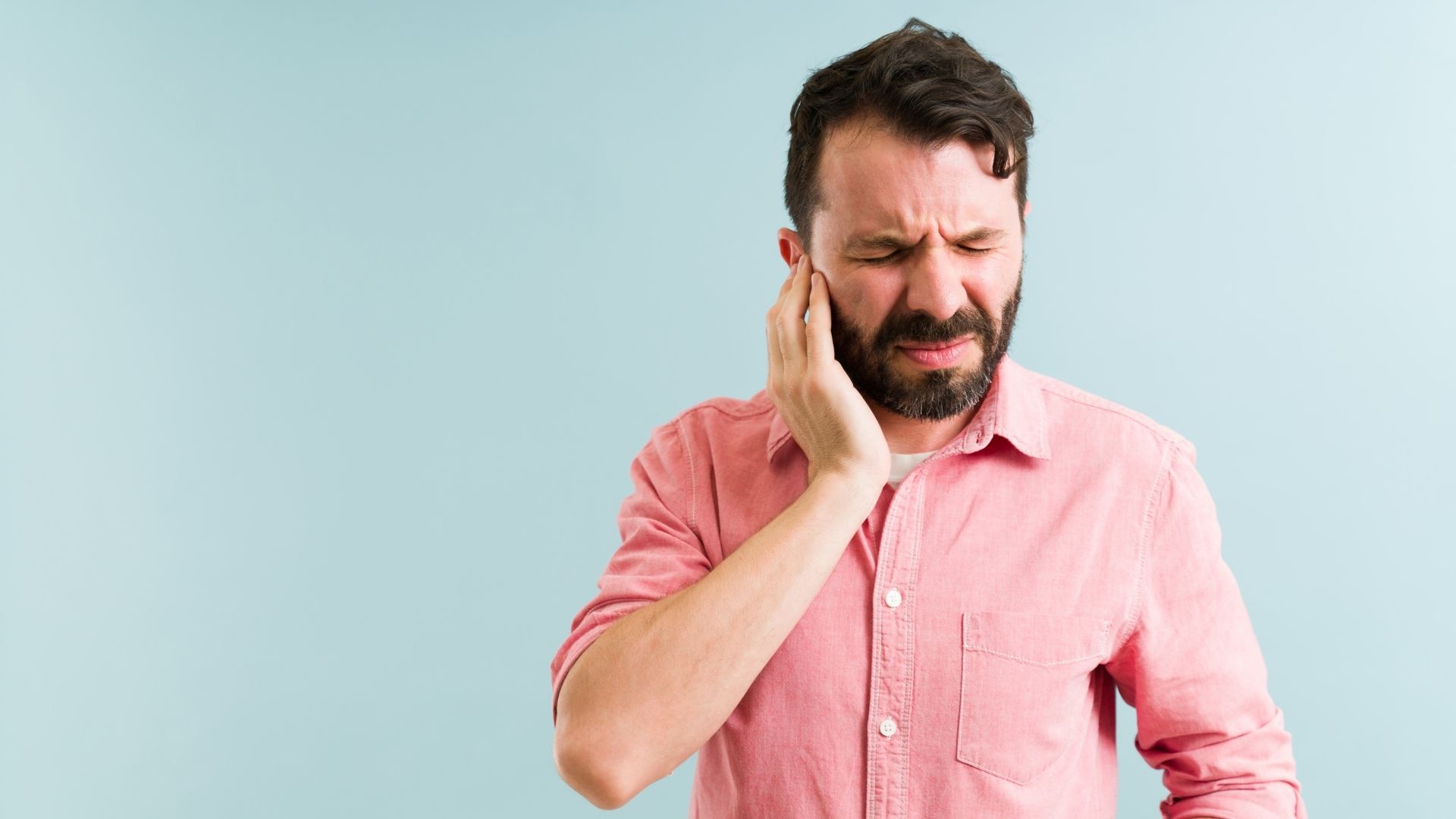
Three symptoms warrant immediate attention after a prolonged or excessively loud listening session: a persistent whistling or buzzing in one or both ears, a cottony sensation or "full" ear, and a noticeable drop in voice intelligibility. These signals indicate excessive strain on the cochlear hair cells and should not be dismissed.
Distinguishing Transient Tinnitus from Persistent Tinnitus
A transient tinnitus often occurs after intense sound exposure: it disappears within minutes to hours, with no documented aftereffects. Persistent tinnitus, on the other hand, lasts beyond 24 hours and indicates potentially irreversible cellular damage.
The distinction is based on duration, but also on subjective intensity and whether it is unilateral or bilateral. A high-pitched unilateral whistle that does not subside after a night of rest constitutes a serious warning sign, regardless of the presumed cause.
Temporary Hearing Loss After Exposure: What to Do in the First 24 Hours
Physiology distinguishes two types of post-exposure hearing loss:
- TTS (Temporary Threshold Shift): reversible elevation of the hearing threshold, disappearing within a few hours to 16 hours depending on the intensity and duration of exposure.
- PTS (Permanent Threshold Shift): permanent loss, resulting from destruction of outer hair cells, which are not regenerable in adults.
The boundary between TTS and PTS is not always predictable in the first hours. The recommended course of action in the 24 hours following overexposure is therefore as follows:
- Immediately stop all amplified listening, including at low volume.
- Avoid any additional noisy environments (transport, open-plan offices).
- Prioritize complete auditory rest, in silence or with passive protection if the environment cannot be controlled.
- Do not consume aspirin or non-steroidal anti-inflammatory drugs without medical advice, as some are ototoxic.
When to Consult an ENT Specialist or Audiologist
The decision rule is simple: any tinnitus or hearing acuity loss persisting beyond 48 hours warrants an urgent ENT consultation, not a deferred appointment several weeks later.
The reason is pharmacological: oral or intratympanic corticosteroid therapy can limit sequelae if initiated within 72 hours of exposure. Beyond this window, the therapeutic window closes and curative treatment options are significantly reduced.
The initial assessment includes a pure-tone audiogram, which measures hearing thresholds frequency by frequency (generally from 250 Hz to 8 kHz, with possible extension to 16 kHz for high frequencies). This assessment objectifies the loss, locates it spectrally, and helps distinguish cochlear damage from middle ear pathology.
An audiologist can perform this assessment, but in the context of acute overexposure, it is the ENT specialist who prescribes and directs toward imaging or treatment if necessary. For individuals regularly exposed, an annual audiometric assessment is the most documented follow-up measure, independent of any reported symptoms.
Special Cases: Pre-existing Tinnitus and Earbud Use
Can You Use Earbuds When Already Suffering from Tinnitus
Suffering from tinnitus does not imply abandoning all use of earbuds. The condition is strict: maintain the sound pressure level below 70 dB SPL, a threshold below which no additional cochlear fatigue is documented over reasonable listening durations. At this level, the risk of worsening remains low, provided transient peaks are avoided, particularly during track changes or notifications.
Individual sensitivity varies according to the origin of the tinnitus (acoustic trauma, presbycusis, vascular cause) and its perceived intensity. Audiological follow-up remains essential before establishing a regular listening protocol.
Sound Therapy and Masking: Therapeutic Use of Earbuds
Earbuds find a clinically recognized use here. Two approaches structure the sound management of tinnitus:
- Partial masking: diffusion of background noise (white noise, pink noise, natural sounds) at a level slightly below that of the tinnitus, to reduce its perception without covering it completely. The goal is not suppression but progressive habituation.
- *TRT (Tinnitus Retraining Therapy)*: protocol combining counseling and very low-level sound therapy, generally between 50 and 60 dB SPL, to recondition the emotional response to the parasitic signal.
In both cases, earbuds serve as a vector for controlled diffusion. A model with moderate ANC can reduce ambient noise without forcing the compensation volume, which constitutes a concrete advantage for sensitive individuals. The best meditation and yoga earbuds 2026 analyzed by the Mute Zone team cover several formats suited to this prolonged low-volume use.
Recommended Volumes and Formats for Sensitive Individuals
The 70 dB SPL threshold constitutes the reference ceiling. In practice, sound therapy is conducted between 50 and 65 dB SPL, which corresponds on most smartphones to 30 to 45 % of maximum volume, depending on the transducer used.
The audio format also plays a role. Compression artifacts introduced by heavily compressed files (low-bitrate MP3, AAC below 128 kbps) generate perceptible harmonic distortions, likely to irritate an already fragile auditory system. The formats recommended for people suffering from tinnitus are as follows:
| Format | Indicative Bitrate | Compression Artifacts | Recommendation |
|---|---|---|---|
| FLAC | Lossless | None | Priority |
| High-quality AAC | 256 kbps | Very low | Acceptable |
| MP3 | 320 kbps | Low | Tolerable |
| MP3 | 128 kbps or less | Marked | To avoid |
The Bluetooth transmission codec intervenes downstream: LC3 (Bluetooth LE Audio) and AAC better preserve fidelity at low bitrate than SBC, whose artifacts at 328 kbps can become audible on content with reduced dynamics such as white noise or natural sounds.
Summary of Best Practices Ranked by Priority
Seven measures concentrate the bulk of prevention. They are ranked by decreasing impact on the sound dose received by the cochlea.
| Priority | Practice | Target Threshold or Parameter |
|---|---|---|
| 1 | Activate the system limiter (iOS "Reduce Loud Sounds", Android "Volume Warning") | 85 dB SPL maximum allowed |
| 2 | Aim for 70 to 75 dB SPL in everyday listening | Measurable via a calibrated SPL app |
| 3 | Activate ANC in noisy environments | Reduction of background noise by 20 to 30 dB to avoid volume compensation |
| 4 | Respect the WHO weekly dose | 40 hours at 80 dB SPL, or less if the level is higher |
| 5 | Choose a model with good passive isolation | Passive attenuation above 20 dB (well-fitted silicone or foam tips) |
| 6 | Take a 10-minute break per hour | Allows recovery of outer hair cells |
| 7 | Consult an ENT if whistling, fullness or hearing loss persists beyond 24 hours | No self-medication, audiometric assessment required |
These seven points are not interchangeable: priorities 1 and 2 act directly on the acoustic energy received, priorities 3 to 6 reduce cumulative exposure, and priority 7 conditions any effective care.
For profiles exposed to pre-existing tinnitus or prolonged headphone listening, the wireless earbuds comparison from Mute Zone integrates passive isolation and ANC compatibility data measured on each tested model, which facilitates selection according to this precise criterion.
Frequently asked
Read next

At What Volume to Listen Without Risking Your Ears (2026 Guide)
Thresholds in dB, WHO-ITU H.870 Standard, EN 50332, Apple, Sony and Bose Limiters: Structured Guide to Preserve Hearing in 2026.

Best meditation and yoga earbuds 2026: Mute Zone selection
Audio headbands, open-ear earbuds or bone conduction: Mute Zone analyzes headphone formats for meditation and yoga in 2026.

Sleeping with Earphones: Documented Risks and 2026 Thresholds
Mechanical pressure, otological infections, nocturnal sound exposure and Bluetooth SAR: the editorial team quantifies each risk and the clinical thresholds not to exceed.